
Auto Body Repair in Oahu: What to Do After a Car Accident
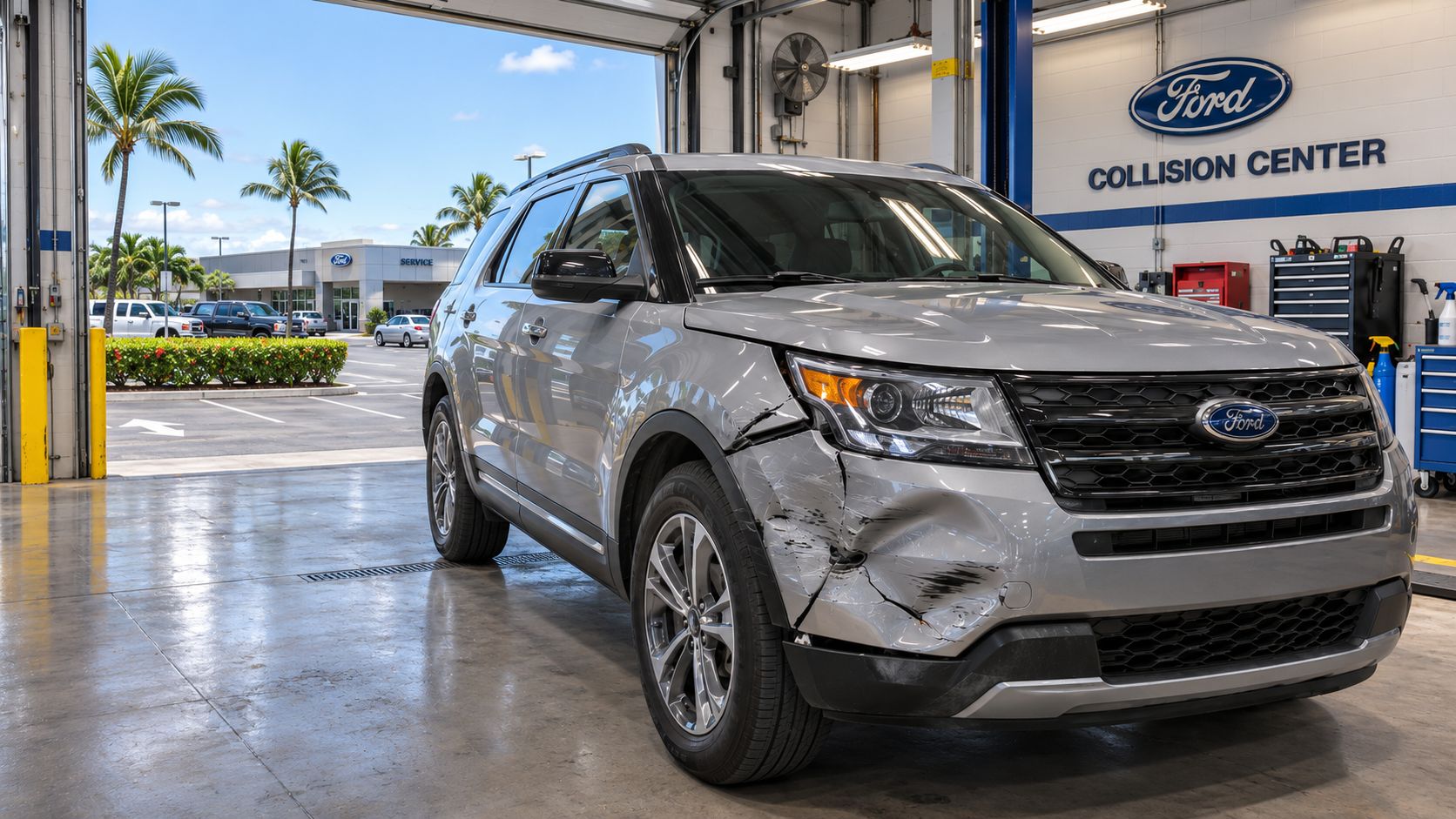
A car accident can turn an ordinary drive across Oahu into a stressful experience. Even a minor collision can leave you wondering whether your vehicle is safe to drive, how much repairs might cost, and where to find a qualified auto body repair shop.
At Cutter Ford in Aiea, we understand that getting your vehicle repaired involves more than fixing visible damage. You also need clear information about the repair process and what to expect before approving work.
Our Body Shop offers collision and body repair services, including dent and scratch removal, auto glass replacement, and panel repairs. Whether you're dealing with parking-lot damage or a more serious collision, this guide explains the steps to take and the questions to ask before scheduling repairs.
What Should You Do Immediately After a Car Accident?
Your first priority after a collision is personal safety, not vehicle repairs.
If you're involved in an accident on Oahu:
- Check for injuries. Call 911 when emergency medical assistance is needed.
- Move to safety when appropriate. If the vehicle can safely be moved and conditions permit, move out of traffic.
- Document the damage. Photograph the vehicles, visible damage, license plates, and surrounding area when it is safe to do so.
- Exchange information. Collect the other driver's contact and insurance details.
- Follow reporting requirements. Contact law enforcement as appropriate and comply with applicable Hawaii accident-reporting requirements.
- Contact your insurance provider. Ask how to initiate a claim and what documentation is required.
Do not assume a damaged vehicle is safe to drive simply because the engine starts.
If you notice fluid leaks, damaged tires, steering problems, or other signs that the vehicle may be unsafe, arrange professional assistance instead of driving it.
Once immediate safety concerns are addressed, you can begin exploring repair options.
What Types of Auto Body Damage Can Be Repaired?
Not every collision creates the same repair needs. Some vehicles have visible cosmetic damage, while others require a more detailed inspection to identify underlying problems.
At Cutter Ford, our documented collision and body repair offerings include the following.
Dent and Scratch Removal
Parking-lot incidents, minor impacts, and accidental contact with objects can leave dents or scratches on a vehicle's exterior.
The appropriate repair method depends on the location and severity of the damage. A small surface mark may need different attention from a dent that affects a body panel's shape or paint.
Auto Glass Replacement
Damaged vehicle glass can affect visibility and safety.
A cracked windshield or broken window should be evaluated to determine whether replacement is needed. For vehicles equipped with cameras or driver-assistance systems near the glass, ask whether additional procedures are required for the specific model.
Panel and Door Replacement
A collision can damage exterior panels, doors, and the components surrounding them.
Depending on the extent of the damage, repair may involve restoring an existing panel or replacing a component.
It is important to consider more than appearance. Door operation, alignment, and related safety components may also need evaluation.
Metal Restructuring
More substantial impacts can affect the metal structure beneath a vehicle's exterior panels.
Structural damage requires careful assessment. The repair method should follow the applicable vehicle manufacturer's repair information and the findings of a qualified repair professional.
If you're unsure which service your vehicle needs, start with our Cutter Ford Body Shop appointment and contact form.
How Does the Collision Repair Process Work?
Understanding the general steps can make the process easier to navigate.
Although repair procedures vary according to the vehicle and damage, a typical collision repair process involves several stages.
| Stage | What to expect |
|---|---|
| Initial assessment | Visible damage is documented and repair needs are evaluated |
| Repair estimate | Proposed labor, parts, and procedures are identified |
| Insurance review | The insurer reviews the claim, when applicable |
| Repair authorization | Required approvals are obtained before work proceeds |
| Vehicle repair | Approved body, glass, or structural work is carried out |
| Final review | Completed work is checked before the vehicle is returned |
This is a general industry process, not a promise of specific repair steps or turnaround times at our dealership.
The vehicle's condition, parts requirements, and any additional damage discovered during repairs can affect the work needed.
Why an Initial Estimate May Change
Some collision damage is not visible until exterior components are removed or a more detailed inspection is completed.
For example, a bumper cover may show only a small dent while components behind it have also been affected.
The Hawaii Insurance Division's guidance on automobile damage claims explains that additional damage discovered during repairs may require a supplemental estimate and further insurer review.
Before approving repairs, ask how additional findings will be communicated and authorized.
How Does Auto Insurance Affect Body Repairs in Hawaii?
If you're filing an insurance claim, understanding your coverage is an important part of the process.
Not every accident-related expense is automatically covered by your policy.
Your deductible, coverage limits, claim circumstances, and applicable policy conditions determine what the insurance company may pay.
According to the Hawaii Insurance Division's motor vehicle insurance information, collision and comprehensive coverage are optional coverages rather than part of the mandatory minimum liability coverage.
This distinction matters when you're evaluating how to pay for damage to your own vehicle.
Before scheduling repairs, consider asking your insurance provider:
- Does my policy cover this type of damage?
- What deductible applies?
- Do I need an inspection or estimate before authorizing work?
- Can I select my preferred licensed repair facility?
- What happens if additional damage is found?
- Are replacement transportation expenses covered?
Hawaii drivers have the right to choose a licensed repair shop, subject to applicable law and policy terms. However, choosing a particular shop does not automatically mean every charge will be covered.
Our Body Shop offers a way to request an appointment, but insurance billing arrangements, direct insurer relationships, and claims-handling services should be confirmed with our team before you proceed.
Why Repair Parts Matter After a Collision
Replacement parts can influence the fit and function of repaired vehicle components.
For Ford owners, it is useful to understand the difference between original equipment manufacturer (OEM) parts and other replacement options.
OEM parts are supplied through the vehicle manufacturer's parts system. Other options may include aftermarket or recycled components.
The appropriate parts depend on the vehicle, the repair procedure, availability, and applicable insurance coverage.
At Cutter Ford, we have a dedicated Parts Center offering Genuine Ford parts. If you're exploring repair options, you can learn more through our Ford parts website.
However, our separate Parts Center offering does not mean every collision repair automatically uses OEM parts. Always ask which components are included in the proposed repair.
Questions to Ask Before Choosing an Auto Body Repair Shop
Choosing a collision repair facility involves more than comparing estimates.
The right questions can help you understand what will happen to your vehicle and how repair decisions will be made.
Ask About Vehicle-Specific Repair Procedures
Modern vehicles can have cameras, sensors, and other safety-related components positioned around bumpers, glass, and body panels.
Depending on the vehicle and collision, these systems may require inspection or manufacturer-specified procedures after repairs.
Ask whether your vehicle requires additional diagnostics or calibration and how the shop handles those requirements.
Do not assume any particular collision certification or calibration capability without confirmation.
Understand the Estimate
A useful repair estimate should help you understand the scope of the proposed work.
Ask whether the estimate identifies:
- Parts to be repaired or replaced
- Labor and material charges
- The proposed replacement-part types
- Work requiring additional assessment
- The process for authorizing changes
A lower initial estimate does not necessarily mean the final repair will cost less, particularly when hidden damage is possible.
Ask About Repair Timing
Repair time depends on the extent of the damage, the procedures required, and parts availability.
Rather than relying on a general promise, ask for a current estimate based on your specific vehicle.
You should also confirm how repair-status updates will be communicated.
Confirm Transportation Arrangements
If you depend on your vehicle for commuting between Aiea, Honolulu, Pearl City, or other parts of Oahu, transportation during repairs may be an important concern.
Check whether your insurance policy includes rental coverage and ask the repair facility about any transportation arrangements before assuming they are available.
What Should You Check After Collision Repairs?
Before accepting your vehicle after repairs, take time to review the completed work and ask about anything you don't understand.
A practical post-repair checklist includes:
- Exterior condition: Examine the repaired panels, paint finish, and visible gaps.
- Doors and windows: Confirm that repaired doors, windows, and related components operate normally.
- Lighting: Check the operation of repaired or replaced exterior lights.
- Dashboard warnings: Ask about any warning lights or messages that remain.
- Documentation: Review the final invoice and the list of completed repairs.
- Follow-up questions: Ask about the applicable parts or workmanship warranties, if any.
If the collision involved safety-related systems, request clarification about any inspections, diagnostics, or calibrations that were required and completed.
A visual inspection alone cannot establish that a vehicle is structurally or mechanically safe. Any concerns should be evaluated by a qualified repair professional.
Contact Cutter Ford for Auto Body Repair in Aiea
When your vehicle needs attention after an accident, we want you to have a clear starting point.
Our Cutter Ford Body Shop offers an online contact and appointment form where you can provide your vehicle information, preferred appointment date, and the type of service needed.
You can begin through our Body Shop appointment request form.
Our dealership is located at:
Cutter Ford
98-015 Kamehameha Hwy
Aiea, HI 96701
For directions and general dealership information, visit Cutter Ford's official website.
If you have a damaged vehicle, contact us before bringing it in so we can clarify the appropriate next steps. For any vehicle that may be unsafe to drive, arrange suitable transportation or towing.
Contact Our Body Shop to Request an Appointment
At Cutter Ford, we're here to help Oahu drivers take the next step toward addressing their vehicle's collision repair needs.