


Ford Hybrid SUV Reviews: Real-World Testing and Performance Data
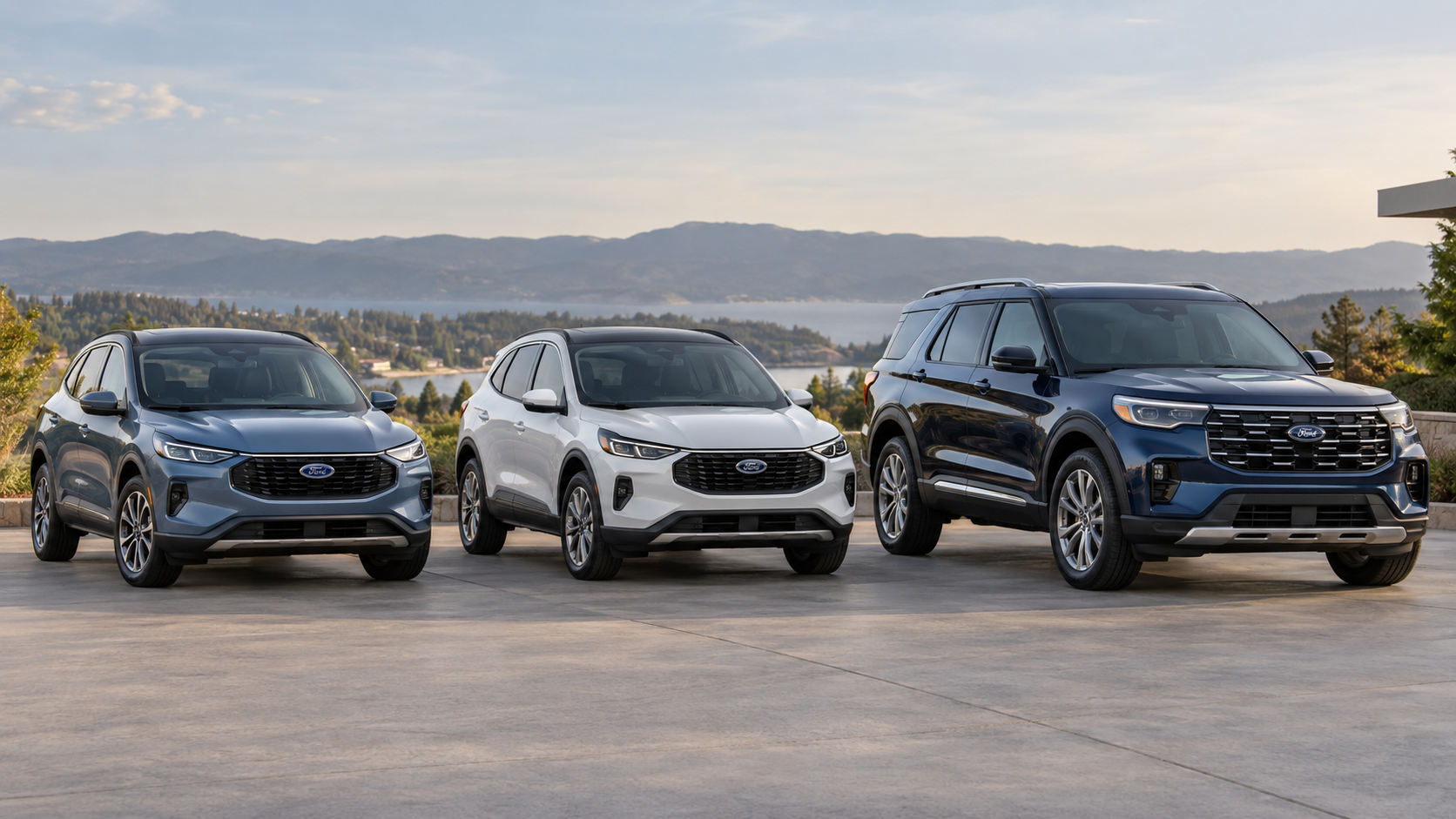
Ford's hybrid SUV lineup offers highly competitive fuel economy at significantly lower entry prices than Toyota's hybrid vehicles. The Escape Hybrid, Escape Plug-In Hybrid (PHEV), and Explorer Hybrid present distinct advantages for island drivers. Do they actually deliver the reliability and real-world performance required to justify your initial investment?
Consumer Reports rates the Ford Escape Hybrid highly for its massive engineering improvements over earlier generations. The hybrid powertrain itself shows excellent long-term reliability. Ford backs this technology with a robust 8-year/100,000-mile warranty covering the battery and all major electric components. For Hawaii drivers facing premium gas prices, this translates directly to massive financial savings. You simply must choose the right specific model for your exact driving pattern.
Ford Escape Hybrid: Compact Efficiency
The standard Escape Hybrid pairs a 2.5-liter four-cylinder engine with an advanced electric motor. This combination produces 200 combined horsepower. EPA testing claims up to 41 combined MPG for front-wheel-drive models. Real-world testing shows a highly respectable 38 to 40 MPG in mixed island driving. Highway performance naturally falls slightly shorter than pure city estimates. You can expect around 35 to 37 MPG when cruising down the H-1 or H-3 highways.
Cargo space measures 37.5 cubic feet behind the second row. This matches the Toyota RAV4 Hybrid's 37.6 cubic feet almost exactly. The Escape pulls ahead significantly in passenger comfort. It offers 40.7 inches of rear legroom. That measurement provides nearly three more inches than the RAV4. This massive spatial advantage makes the Escape noticeably more comfortable for adult passengers during long drives to the North Shore.
The SYNC 4 infotainment system features a massive 13.2-inch touchscreen on Premium trims. It includes wireless Apple CarPlay seamlessly. The system receives regular over-the-air software updates. Toyota still forces buyers to pay extra for similar technology on equivalent trim levels.
Pricing for the base front-wheel-drive model typically starts slightly higher than a base RAV4 Hybrid LE. Driving 15,000 miles annually in Hawaii saves you roughly $1,000 per year compared to driving a standard 25-MPG non-hybrid SUV. That mathematical reality puts your absolute break-even point at just three years.
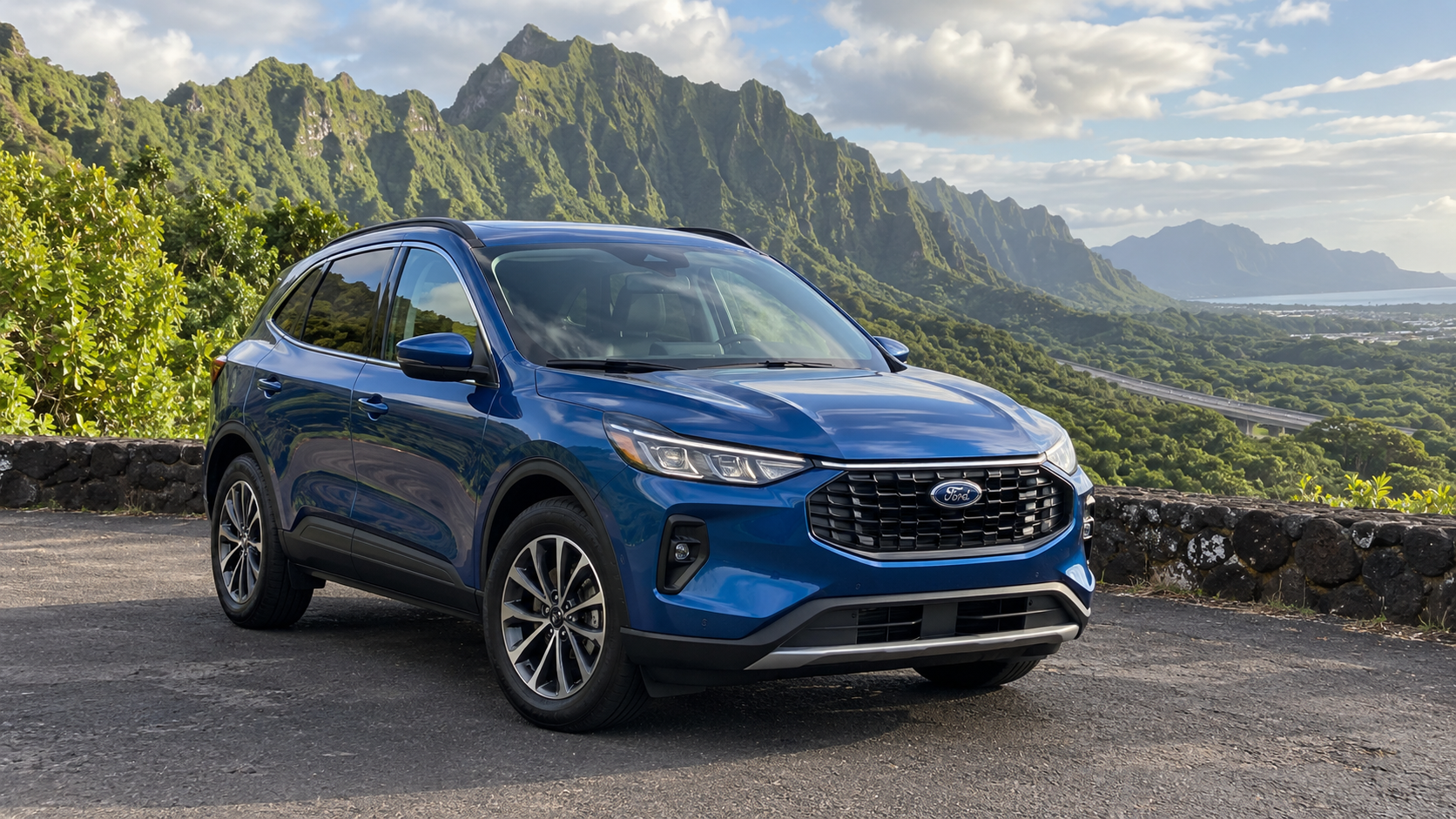
Escape Plug-In Hybrid (PHEV): The Ultimate Commuter
The Escape PHEV adds a significantly larger battery pack. This critical upgrade provides an EPA-rated 37 miles of pure electric range. Real-world testing consistently yields 30 to 33 electric miles depending heavily on temperature and driving aggression. That range easily covers most daily Oʻahu commutes entirely on electricity. A standard Level 2 home charger fills the battery completely in just 3.5 hours.
The financial case depends entirely on your daily mileage and charging access. If you drive under 30 miles daily and charge at home, you will rarely visit a gas station. Hawaii's electricity rates remain high. A full electric charge still costs significantly less than buying liquid fuel. You save roughly $20 per week in fuel costs alone compared to driving a traditional combustion vehicle. Taking advantage of Hawaiian Electric's time-of-use rates overnight maximizes those savings even further.
The PHEV carries a higher starting MSRP because it is exclusively available in the Premium trim level. It qualifies for a $3,750 federal tax credit. This government incentive brings the effective purchase price down dramatically. It remains slightly more expensive than the standard hybrid model. For military families stationed at Pearl Harbor or Schofield Barracks, Cutter Ford's military appreciation program makes that initial premium highly manageable.
You should skip the PHEV entirely if you cannot charge the vehicle daily. Once the large battery depletes, you are hauling dead weight. The vehicle then operates exactly like the standard hybrid while achieving similar 40 MPG numbers.
Side-by-Side Data Comparison
Understanding the exact specifications helps clarify which hybrid model fits your lifestyle. Here is a direct comparison of Ford's hybrid options alongside their primary Toyota competitor.
| Metric | Ford Escape Hybrid | Ford Escape PHEV | Ford Explorer Hybrid | Toyota RAV4 Hybrid |
|---|---|---|---|---|
| EPA Combined MPG | 41 MPG | 105 MPGe / 40 MPG | 28 MPG | 40 MPG |
| All-Electric Range | N/A | Up to 37 Miles | N/A | N/A |
| Combined Horsepower | 200 hp | 210 hp | 318 hp | 219 hp |
| Max Towing Capacity | 1,500 lbs | 1,500 lbs | 5,000 lbs | 1,750 lbs |
| Rear Legroom | 40.7 inches | 38.9 inches | 39.0 inches | 37.8 inches |
(Note: While Ford has updated the brand-new Explorer lineup, the Explorer Hybrid remains highly sought after in the used and certified pre-owned market for families requiring three rows of efficient seating. Specifications reflect standard configurations.)
Explorer Hybrid: Three Rows With Serious Efficiency
Ford's larger hybrid pairs a muscular 3.3-liter V6 engine with an electric motor. This robust setup generates 318 combined horsepower. It delivers 28 combined MPG. That represents a massive 5 MPG improvement over the standard non-hybrid Explorer equipped with the 2.3-liter EcoBoost engine. This specific efficiency bump translates directly to massive annual fuel savings at local Hawaii gas stations.
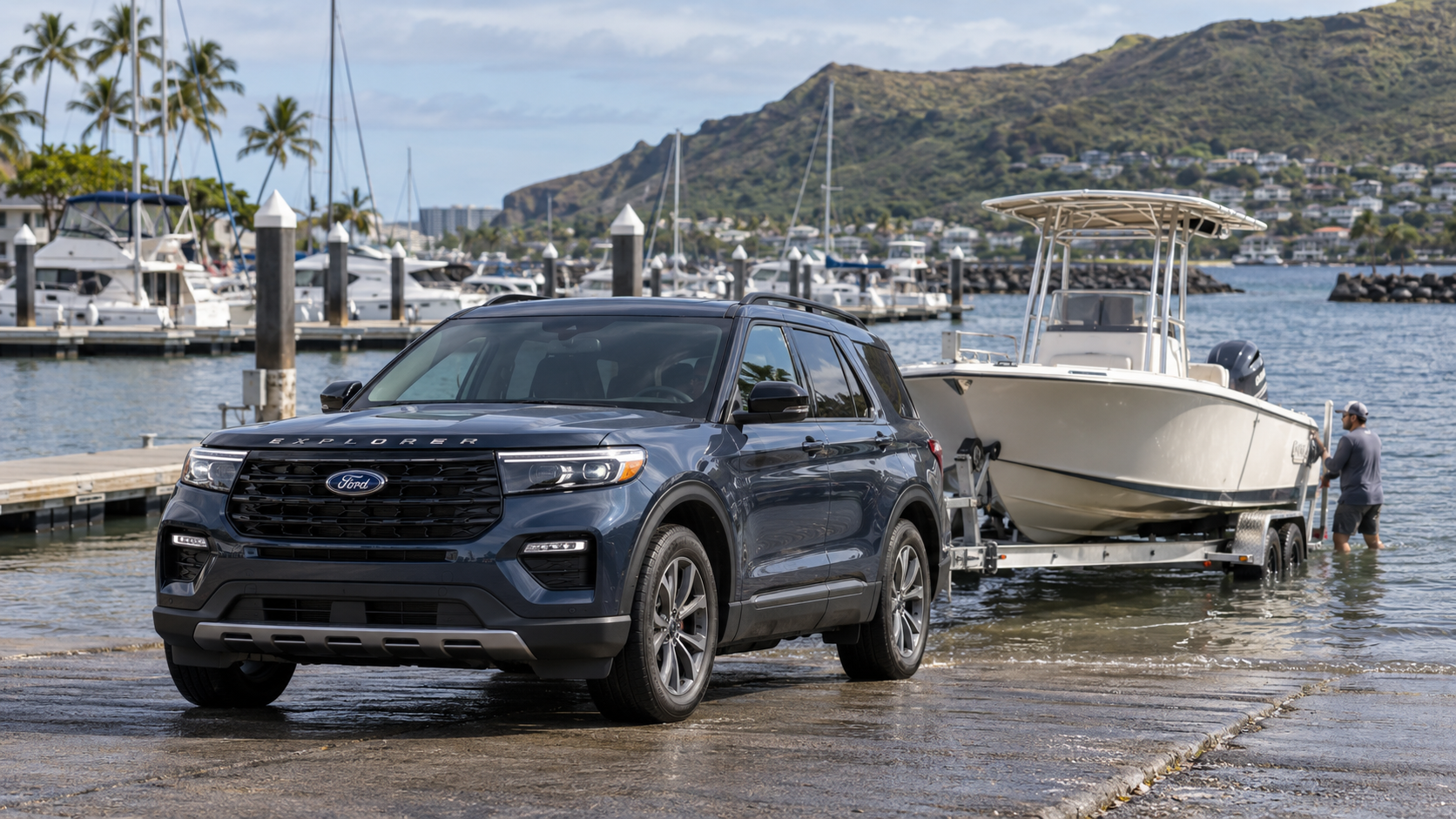
The third row offers legitimate adult space for shorter trips across Honolulu. Cargo capacity measures 18.2 cubic feet behind the third row. You secure 87.8 total cubic feet with all seats folded flat. Towing capacity hits a highly respectable 5,000 pounds. This handles most standard boat trailers and utility needs around Oʻahu perfectly. You can haul dive gear and heavy coolers without straining the powertrain.
The hybrid powertrain was heavily prioritized for upper trim levels like the Limited. You are paying for the advanced powertrain alongside premium luxury features. For growing families needing three rows of seating, it serves as the most efficient option in the extended Ford lineup. Cutter Ford's sales team deeply understands multi-generational transport needs. We can help you source the perfect pre-owned Explorer Hybrid for your family.
Ford Escape vs. Toyota RAV4 Hybrid
The RAV4 Hybrid technically edges out the standard Escape on fuel economy by a microscopic margin. Real-world results mirror that extremely narrow gap perfectly. Over 15,000 annual miles, that minor difference equals roughly $40 in total savings. That tiny monetary value should never dictate your final buying decision.
Toyota wins decisively regarding historical resale value. Kelley Blue Book resale data shows the RAV4 holds slightly more of its original value after five years of ownership.
The Escape counters heavily with significantly better rear legroom. It provides superior infotainment technology right out of the box. It features highly responsive car-like handling. The Escape feels incredibly agile in tight urban driving scenarios. The RAV4 drives much more like a traditional heavy SUV. Both vehicles earn top safety ratings when properly equipped.
Your choice comes down entirely to personal priorities. Choose the RAV4 if maximizing theoretical resale value matters most. Choose the Escape if you heavily value modern tech features. It serves perfectly if you prioritize spacious rear seating and engaging driving dynamics.
What You Actually Spend Beyond the Sticker Price
Regenerative braking technology extends your standard brake service intervals massively. You can often reach 80,000 miles before needing brake pad replacements. This represents a huge maintenance savings over the vehicle's first five years. Hybrid battery replacement runs expensive outside of warranty. Premature failures remain incredibly rare. The factory 8-year/100,000-mile warranty covers the vast majority of ownership periods comfortably.
Hawaii's moderate year-round temperatures actually benefit lithium-ion batteries immensely. Extreme cold and severe desert heat degrade battery cells rapidly. Our tropical climate preserves battery health perfectly. Salt air does require more frequent undercarriage washing to protect exposed electrical components. Modern sealed hybrid systems handle humidity without any structural issues. Cutter Ford's service department understands these specific island wear patterns flawlessly.
Five-year depreciation runs slightly higher for the Escape Hybrid versus the RAV4 Hybrid. Insurance costs generally run nominally more annually than non-hybrid equivalents. The integrated active safety features often qualify buyers for immediate insurance discounts. Hawaii's perpetually high gas prices help hybrids hold their value far better than they do in mainland markets.
Find Your Next Hybrid SUV at Cutter Ford Today
Are you ready to stop paying a premium at the gas pump? The Ford hybrid SUV lineup delivers incredible efficiency without forcing you to sacrifice interior comfort or advanced technology.
Choose a category below to explore our inventory, schedule an appointment for complete Oʻahu auto service, or start your paperwork:
- Shop & Save
- Finance & Service
- Visit Us
Call our sales department directly at (808) 204-9444 or visit our showroom in person at 98-015 Kamehameha Hwy, Aiea, HI 96701.