


Ford Commercial Work Vans in Hawaii: Models, Upfits & Costs
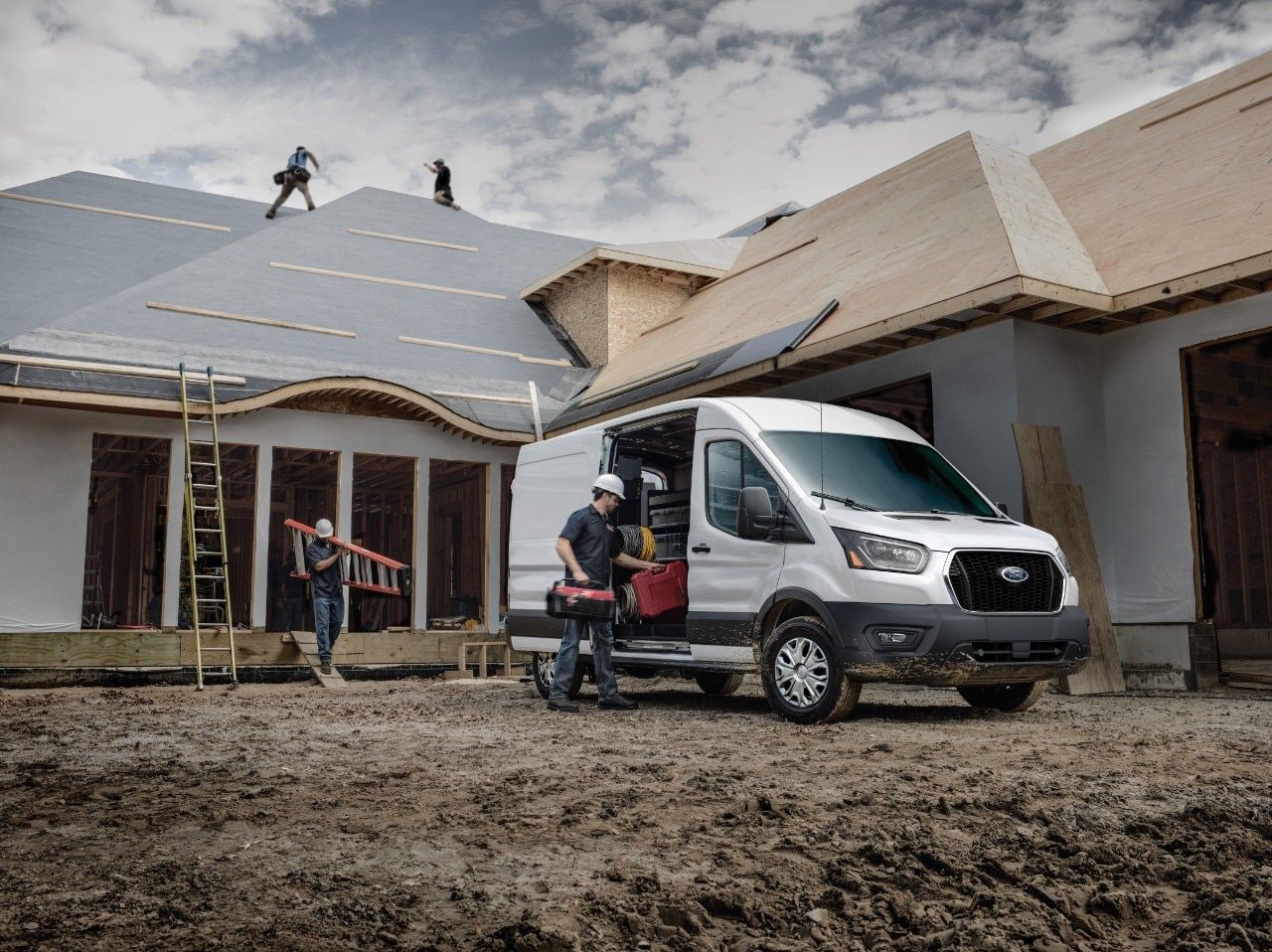
Finding the right Ford commercial work van in Hawaii means looking beyond the model name. A delivery company, plumbing contractor, and mobile repair business may all need a cargo van, but each has different requirements for storage, payload, and operating costs.
At Cutter Ford in Aiea, our Fleet Department helps Hawaii businesses explore commercial vehicle options for their day-to-day operations.
Whether you're shopping for one work van or planning a larger fleet, we'll help you understand the important differences between Ford Transit, E-Series, and E-Transit vehicles before you decide.
Which Ford Commercial Work Van Fits Your Business?
Ford offers several commercial van platforms, each designed for different applications. The main distinction is whether you need a complete cargo van or a commercial chassis built to accommodate specialized equipment.
| Ford model | Main configuration | Common business applications |
|---|---|---|
| Ford Transit | Cargo van, passenger van, cutaway, chassis cab | Plumbing, HVAC, deliveries, mobile services |
| Ford E-Series | Cutaway, stripped chassis | Shuttle bodies, box trucks, specialty vehicles |
| Ford E-Transit | Electric cargo van, cutaway, chassis cab | Delivery and service fleets with planned routes |
Ford's current commercial vehicle lineup provides information about available models and configurations. Specifications vary by model year and build.
Ford Transit: Flexible Cargo Space for Everyday Work
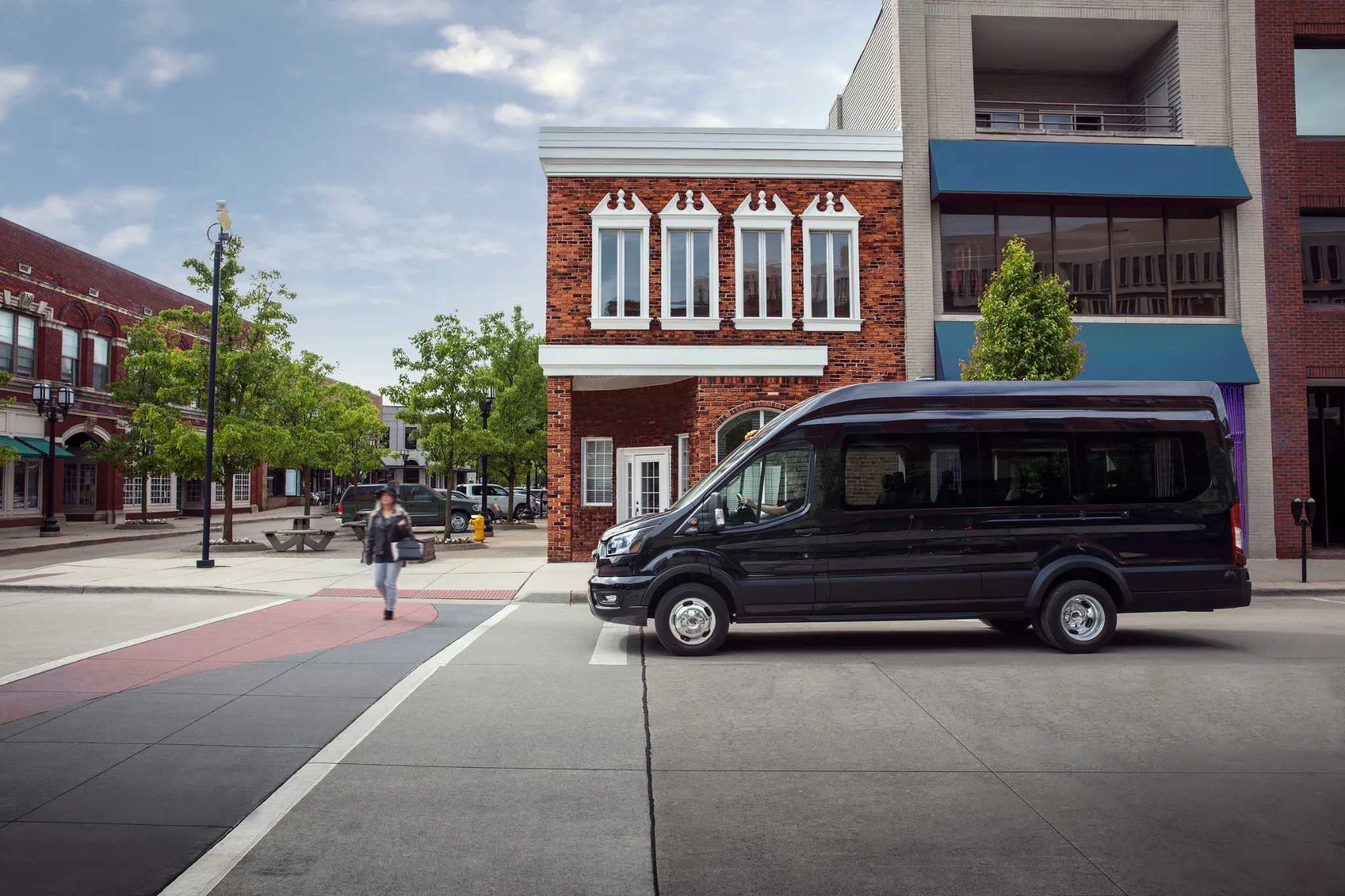
The Ford Transit is a practical starting point for businesses that need enclosed storage for equipment and materials.
Available configurations include different roof heights, body lengths, and drivetrain options, depending on the model.
For example, an electrician carrying tools and supplies may prioritize organized storage and easy cargo access. A delivery business transporting bulky packages may need more interior volume.
Before choosing a Transit, consider:
- Roof height: A medium or high roof can provide additional working room for equipment installation and cargo handling.
- Vehicle length: Longer configurations provide more room but require consideration of parking and maneuverability.
- Payload capacity: Shelving, equipment, passengers, and materials all contribute to the vehicle's total load.
- Drivetrain: Available rear-wheel-drive and all-wheel-drive configurations may suit different operating conditions.
The right configuration depends on how your business actually uses the van, not simply how much cargo space it offers.
Ford E-Series: A Foundation for Specialized Commercial Bodies
The Ford E-Series serves businesses that need a purpose-built commercial vehicle rather than a conventional enclosed cargo van.
New E-Series vehicles are offered as cutaway and stripped chassis configurations. The original enclosed E-Series cargo van is no longer part of Ford's new-vehicle lineup.
Depending on the body builder and completed vehicle specifications, E-Series platforms can support commercial applications such as passenger transportation, delivery bodies, or specialized service equipment.
The critical decision is choosing the chassis that supports the intended body and equipment weight.
Ford E-Transit: Electric Power for Planned Routes
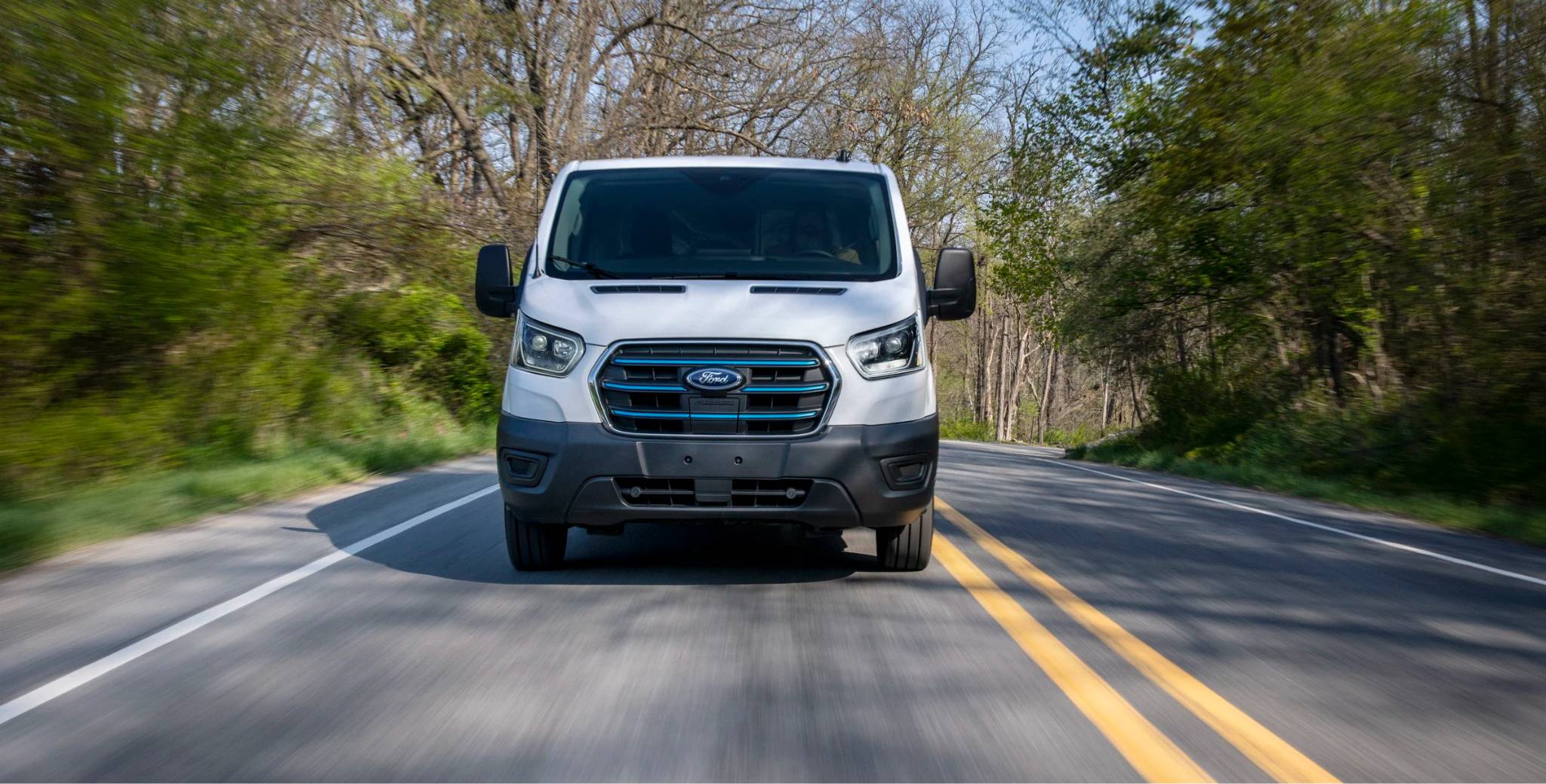
The Ford E-Transit offers an all-electric alternative for businesses considering commercial fleet electrification.
It can be worth evaluating if your business operates predictable routes and has reliable charging access.
Potential applications include local delivery services and scheduled maintenance routes. However, suitability depends on daily mileage, payload, charging arrangements, and vehicle configuration.
We'll explore those factors further below.
What Happened to the Ford Transit Connect?
The smaller Ford Transit Connect was discontinued after the 2023 model year in the United States.
Businesses looking for a compact commercial van may still consider a pre-owned Transit Connect, subject to availability and vehicle condition.
You can explore our used commercial vehicle inventory when comparing pre-owned work vehicles.
Choosing the Right Size, Payload, and Cargo Layout
A common mistake when shopping for a commercial van is choosing the vehicle based on cargo dimensions alone.
Three specifications deserve particular attention:
- Payload is the maximum weight the vehicle can carry, including occupants, equipment, and cargo.
- Cargo volume describes the available interior storage space.
- Gross Vehicle Weight Rating (GVWR) is the maximum permitted loaded weight of the vehicle.
A van with ample cargo room may still reach its weight limit after shelving and work equipment are installed.
Consider a plumbing business carrying pipe fittings, tools, and replacement equipment. The van needs enough space to organize those items, but the completed setup must also stay within the manufacturer's weight limits.
Before selecting a configuration, prepare an equipment list and estimate the weight of materials normally carried on a workday.
Ford's Truck Body Builders Advisory Service provides technical resources for evaluating vehicle specifications and commercial body installations.
Planning a Commercial Van Upfit
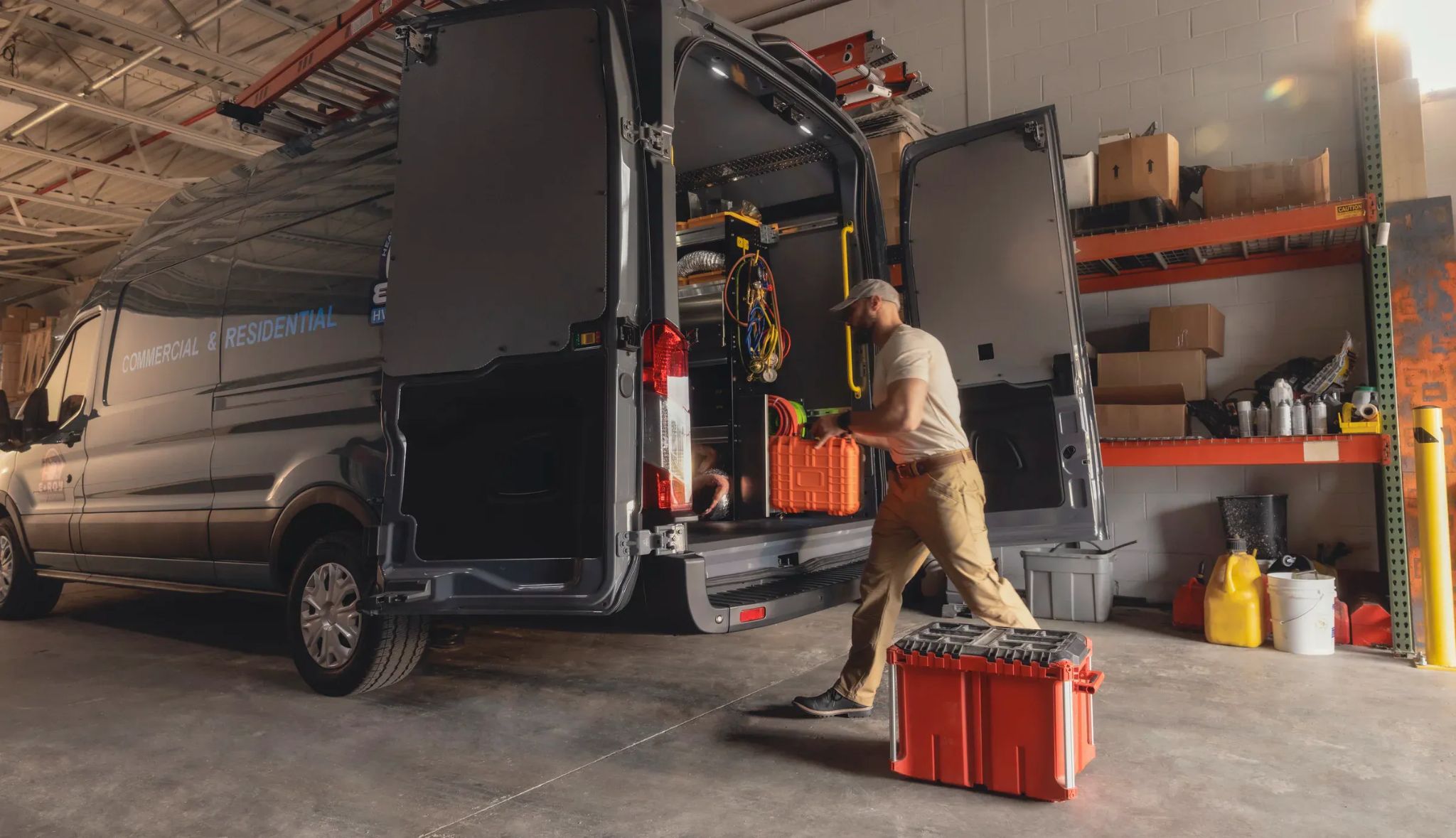
An upfit modifies a commercial vehicle for a specific job. The right equipment can make tools easier to reach and keep materials organized during daily operations.
Common commercial van upfits include:
- Interior shelving and storage racks
- Tool cabinets and cargo partitions
- Ladder racks and equipment mounts
- Refrigerated cargo equipment
- Mobile workshop installations
- Specialized delivery or service bodies
An HVAC business, for example, may prioritize shelving for replacement components and a secure area for larger tools. A delivery company may need more open floor space and unobstructed access through the rear doors.
What to Check Before Ordering an Upfit
Start with the work your vehicle performs every day.
Identify what needs to be carried, how frequently employees access equipment, and whether the vehicle will operate fully loaded.
Then review the proposed configuration with a qualified upfitter. Important considerations include weight distribution, vehicle compatibility, equipment mounting, electrical requirements, and applicable Ford guidelines.
Upfit modifications should also be reviewed for warranty implications. Warranty coverage depends on the affected component and applicable terms; an aftermarket modification does not automatically void the entire vehicle warranty.
Our Fleet Department can discuss commercial vehicle options and help you identify questions to resolve before purchasing a chassis or cargo van. Specialized upfit availability, installation arrangements, and lead times should be confirmed separately.
Understanding Ford Commercial Van Costs in Hawaii
The purchase price is only one part of the cost of owning a commercial work van.
Vehicle model, roof height, powertrain, and equipment options affect the final configuration. Businesses in Hawaii should also account for freight or delivery charges where applicable, along with taxes and registration expenses.
For a more useful comparison, request a written estimate for the specific vehicle and configuration you're considering.
Then calculate the longer-term expenses associated with operating it.
| Cost category | What to consider |
|---|---|
| Vehicle acquisition | Selected model, configuration, applicable charges |
| Upfitting | Equipment, installation, electrical work |
| Fuel or electricity | Daily route distance and energy consumption |
| Maintenance | Routine servicing, tires, repairs |
| Insurance | Commercial coverage and vehicle use |
| Downtime | Business disruption during repairs or equipment installation |
These costs may differ significantly between a contractor operating one van and a company managing several delivery vehicles.
Should You Buy a New or Used Commercial Van?
A new commercial vehicle may offer greater flexibility in selecting factory configurations and compatible equipment.
A used van may be worth considering when an available vehicle already meets your business requirements.
When evaluating a pre-owned van, review its maintenance history, condition, previous commercial use, and any existing modifications.
Our website has both new commercial vehicle information and used commercial vehicle options to help you begin comparing. Inventory and configurations are subject to change.
Can Your Business Deduct a Commercial Van Purchase?
Some qualifying business vehicle purchases may be eligible for tax deductions, including deductions under Section 179.
Eligibility depends on factors such as business use, the type of vehicle, when it is placed in service, and applicable deduction limits.
The IRS explains these requirements in Publication 946, How To Depreciate Property.
Work with your CPA or tax adviser before including potential deductions in your purchasing budget.
Is an Electric Ford E-Transit Practical for Hawaii Businesses?
An electric commercial van can be practical for an Oahu business, especially when routes are consistent and vehicles return to the same location for charging.
However, island driving alone does not make an electric van the right financial choice.
Before choosing an E-Transit, evaluate three factors.
1. Daily Driving Range
Calculate the distance your van normally travels, including additional stops or unexpected route changes.
Compare that requirement with the range of the specific E-Transit configuration. Weather, accessory use, vehicle load, and driving conditions can affect real-world range.
2. Charging Availability
Consider where the vehicle will charge and how much time is available between shifts.
For businesses operating from leased facilities or shared parking areas, confirm that charger installation and electrical capacity are feasible before ordering.
3. Operating Expenses
Compare the cost of electricity with gasoline using realistic local energy rates and your expected annual mileage.
Include the expense of charging equipment and installation, where required.
Electric vehicles may offer different maintenance needs, but that does not mean every fleet will have lower total ownership costs.
A federal tax consideration: The IRS states that the Qualified Commercial Clean Vehicle Credit is unavailable for vehicles acquired after September 30, 2025. Businesses considering an E-Transit purchase in 2026 should not assume that this federal purchase credit remains available.
You can review the IRS commercial clean vehicle credit guidance for applicable rules and historical eligibility.
Commercial Vehicle Sales and Service at Cutter Ford
Choosing a work van is easier when you can discuss both the vehicle and your business's operating requirements.
At Cutter Ford, our dedicated commercial team works with business customers seeking work trucks, cargo vans, and other commercial vehicles.
We also have a commercial service department for ongoing vehicle maintenance and service needs.
For eligible maintenance, our Ford Mobile Service program may provide a convenient alternative to bringing your vehicle to the dealership. Services and availability vary, and location and distance restrictions apply.
Our commercial team can help you review vehicle choices, while our service department can explain applicable maintenance options.
Find a Ford Commercial Work Van for Your Business
The right Ford commercial work van should fit your equipment, daily workload, and operating budget.
For many trades, that means comparing Transit cargo van configurations. For specialized commercial bodies, an E-Series or Transit cutaway may be more appropriate. If your business has predictable routes and reliable charging access, E-Transit deserves consideration.
We welcome Oahu business owners to discuss their commercial vehicle needs with our team in Aiea.
Contact our Cutter Ford Fleet Department or call (808) 564-9751 to discuss available work vehicles and configurations.
Visit us at 98-015 Kamehameha Hwy, Aiea, HI 96701. We look forward to helping you find a commercial vehicle that makes sense for your business.