


Ford F-250 vs. Ford F-350: Choosing the Right Super Duty for Your Hawaii Business Fleet
Running a commercial operation in Hawaii presents a distinct set of operational challenges. Whether your crews haul heavy construction equipment over the H-3 elevation gain to Kaneohe, transport boats down to Hawaii Kai Marina, or navigate tight staging zones in downtown Honolulu and Kaimuki, selecting the right heavy-duty truck directly impacts your daily productivity and operational costs.
At Cutter Ford, located off Kamehameha Highway in Aiea, we work directly with island business owners to outfit their commercial fleets. Two of the most relied-upon workhorses on Oahu job sites are the Ford F-250 Super Duty and the Ford F-350 Super Duty. While both trucks share aluminum-alloy cab structures and high-strength steel frames, key differences in payload capacity, towing limits, axle configurations, and commercial registration implications set them apart.
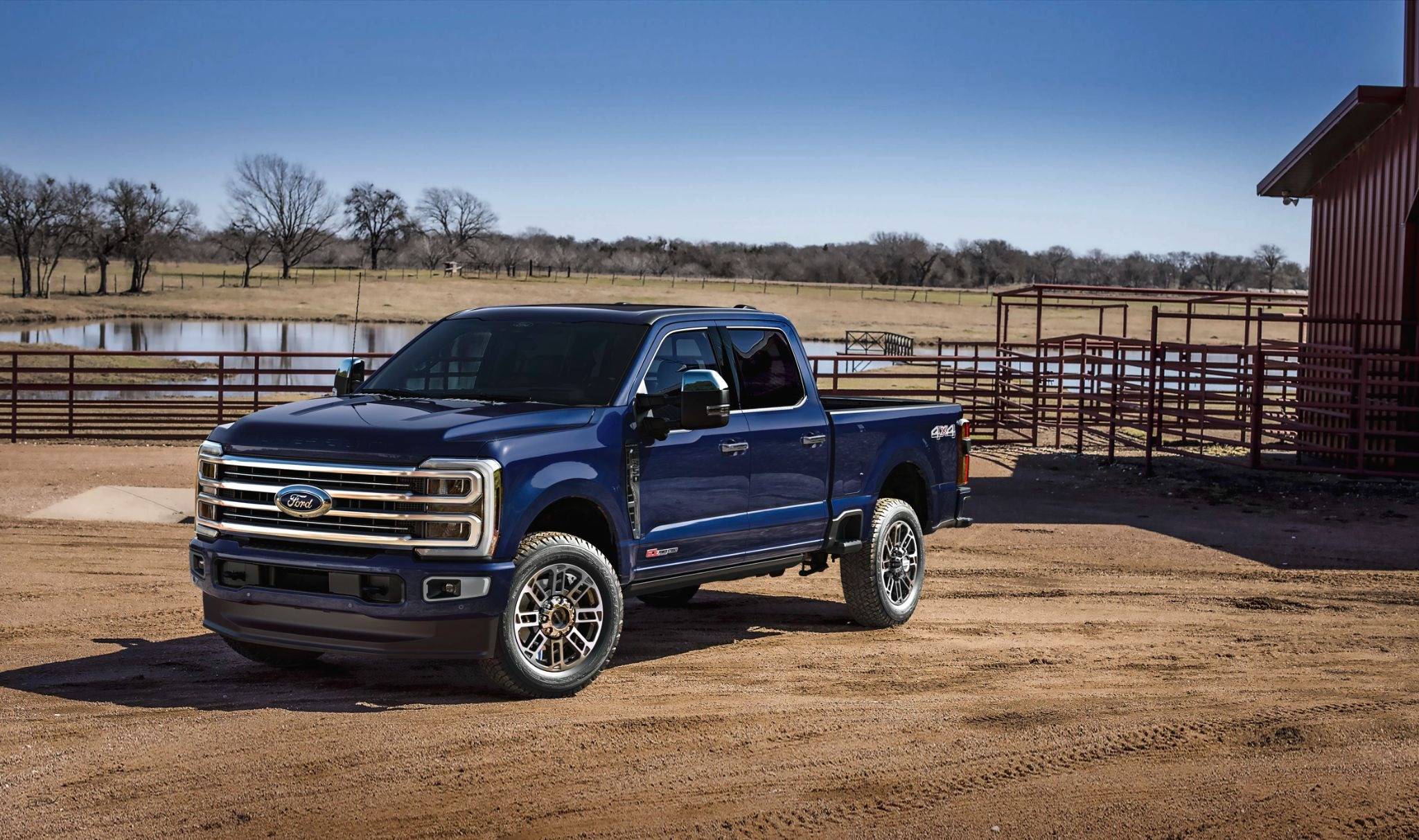
Head-to-Head Spec Breakdown
The primary structural differences between the Ford F-250 and F-350 lie beneath the sheet metal. The F-350 features heavier-duty rear leaf springs, larger rear axle shafts, higher Gross Axle Weight Ratings (GAWR), and higher Gross Vehicle Weight Ratings (GVWR). These underlying frame and suspension enhancements allow the F-350 to carry heavier payloads and tow maximum gross weights without excessive rear-end sag.
Engine Configurations & Performance Output
Both Super Duty trucks offer four engine options:
- 6.8L DEVCT NA PFI V8 Gas: Generates 405 horsepower and 445 lb-ft of torque.
- 7.3L V8 Gas: Generates 430 horsepower and 485 lb-ft of torque.
- 6.7L Power Stroke® V8 Turbo Diesel: Generates 475 horsepower and 1,050 lb-ft of torque.
- 6.7L High Output Power Stroke® V8 Turbo Diesel: Generates 500 horsepower and 1,200 lb-ft of torque.
All four powertrains pair with Ford's TorqShift® 10-speed automatic transmission designed to optimize shift points under heavy load. Because heavy-duty trucks over 8,500 lbs GVWR are not rated by the EPA for official MPG estimates, fuel economy depends on load weight, road gradient, and rear axle gear ratios.
Payload and Towing Thresholds
The Ford F-250 maximum payload reaches 4,246 lbs when properly configured with gas engines, while maximum conventional towing tops out at 22,000 lbs. With a fifth-wheel or gooseneck setup, the F-250 reaches up to 23,000 lbs.
The Ford F-350 expands performance limits further. In single rear wheel (SRW) trim, payload expands significantly. Choosing the dual rear wheel (DRW) configuration unlocks up to 8,000 lbs of maximum payload, up to 30,000 lbs of conventional towing, and up to 38,000 lbs of maximum gooseneck/fifth-wheel towing capability.
| Metric / Specification | Ford F-250 Super Duty | Ford F-350 Super Duty (SRW / DRW) |
|---|---|---|
| Base Engine | 6.8L DEVCT Gas V8 (405 hp / 445 lb-ft) | 6.8L DEVCT Gas V8 (405 hp / 445 lb-ft) |
| Available Engine Upgrades | 7.3L Gas V8 / 6.7L Diesel V8 / 6.7L HO Diesel V8 | 7.3L Gas V8 / 6.7L Diesel V8 / 6.7L HO Diesel V8 |
| Transmission | TorqShift® 10-Speed Automatic | TorqShift® 10-Speed Automatic |
| Max Payload Capacity | Up to 4,246 lbs | Up to 8,000 lbs (DRW) |
| Max Conventional Towing | Up to 22,000 lbs | Up to 30,000 lbs |
| Max Gooseneck / 5th-Wheel | Up to 23,000 lbs | Up to 38,000 lbs (DRW) |
| Wheel Configurations | Single Rear Wheel (SRW) Only | Single Rear Wheel (SRW) & Dual Rear Wheel (DRW) |
| Gross Vehicle Weight Rating | Up to 10,000 lbs GVWR | Up to 14,000 lbs GVWR |
Single Rear Wheel vs. Dual Rear Wheel Setups
Selecting between single rear wheel and dual rear wheel setups is a key decision when configuring your fleet.
Single Rear Wheel (SRW) Advantages
Available on all F-250 models and select F-350 configurations, SRW trucks feature a single tire on each side of the rear axle.
- Maneuverability: SRW models measure approximately 80 inches wide excluding mirrors. This width makes navigating narrow alleys in Kaimuki, tight parking structures in downtown Honolulu, or crowded job sites in Aiea manageable.
- Tire Replacement Costs: Standard four-tire replacement schedules lower routine operating expenses across high-mileage fleets.
- Off-Road Traction: A narrower track width tracks better in soft sand or mud during off-pavement utility work along the North Shore.
Dual Rear Wheel (DRW) Advantages
Exclusive to the F-350 line, DRW models add a second pair of wheels to the rear axle, widening the rear stance up to 96 inches.
- Lateral Stability: Dual rear wheels broaden the footprint, significantly reducing side-to-side sway when hauling top-heavy slide-in utility bodies or towing high-profile fifth-wheel trailers against crosswinds on the Pali Highway or Nimitz Highway.
- Payload Distribution: Spreading rear weight across four tires provides a higher rear GAWR, enabling high payload capacity without exceeding tire safety margins.
- Tire Redundancy: In the event of a rear tire puncture while carrying a heavy payload on the H-1 Freeway, a dual rear wheel setup provides an added margin of control to pull off the roadway safely.
Fifth-Wheel Towing Capabilities & Commercial Considerations on Oahu
If your business hauls multi-car trailers, heavy excavator floats, or commercial machinery around Oahu, fifth-wheel and gooseneck ratings take center stage.
While an F-250 equipped with the High-Capacity Trailer Tow Package handles up to 23,000 lbs of fifth-wheel towing, payload limits can be reached quickly once tongue weight (typically 15% to 25% of overall trailer weight) transfers onto the rear axle. The F-350 provides substantial margin. Its higher GVWR ensures that even with a 4,000 lb hitch load from a full commercial trailer, your truck remains legally compliant and mechanically stable.
Oahu Commercial Registration & GVWR Classifications
Hawaii weight taxation and commercial registration guidelines depend directly on vehicle weight ratings:
- The 10,000-lb Threshold: Standard F-250 models are engineered to sit at or under the 10,000-lb GVWR mark. This allows many trade contractors to bypass specific commercial driver requirements or higher DOT registration tiers while maintaining heavy towing capabilities.
- Weight Tax Considerations: Hawaii state and county motor vehicle registration fees are calculated using unladen vehicle weight. The heavier frame, dual axles, and additional tires of an F-350 DRW result in higher annual registration fees and weight taxes compared to an F-250 SRW.
- Safety Inspection Compliance: Vehicles over 10,000 lbs GVWR used for business purposes are subject to Hawaii Commercial Vehicle Safety Inspections. Choosing an F-350 SRW or DRW fleet setup means keeping structured inspection logs and maintaining regular vehicle maintenance schedules.
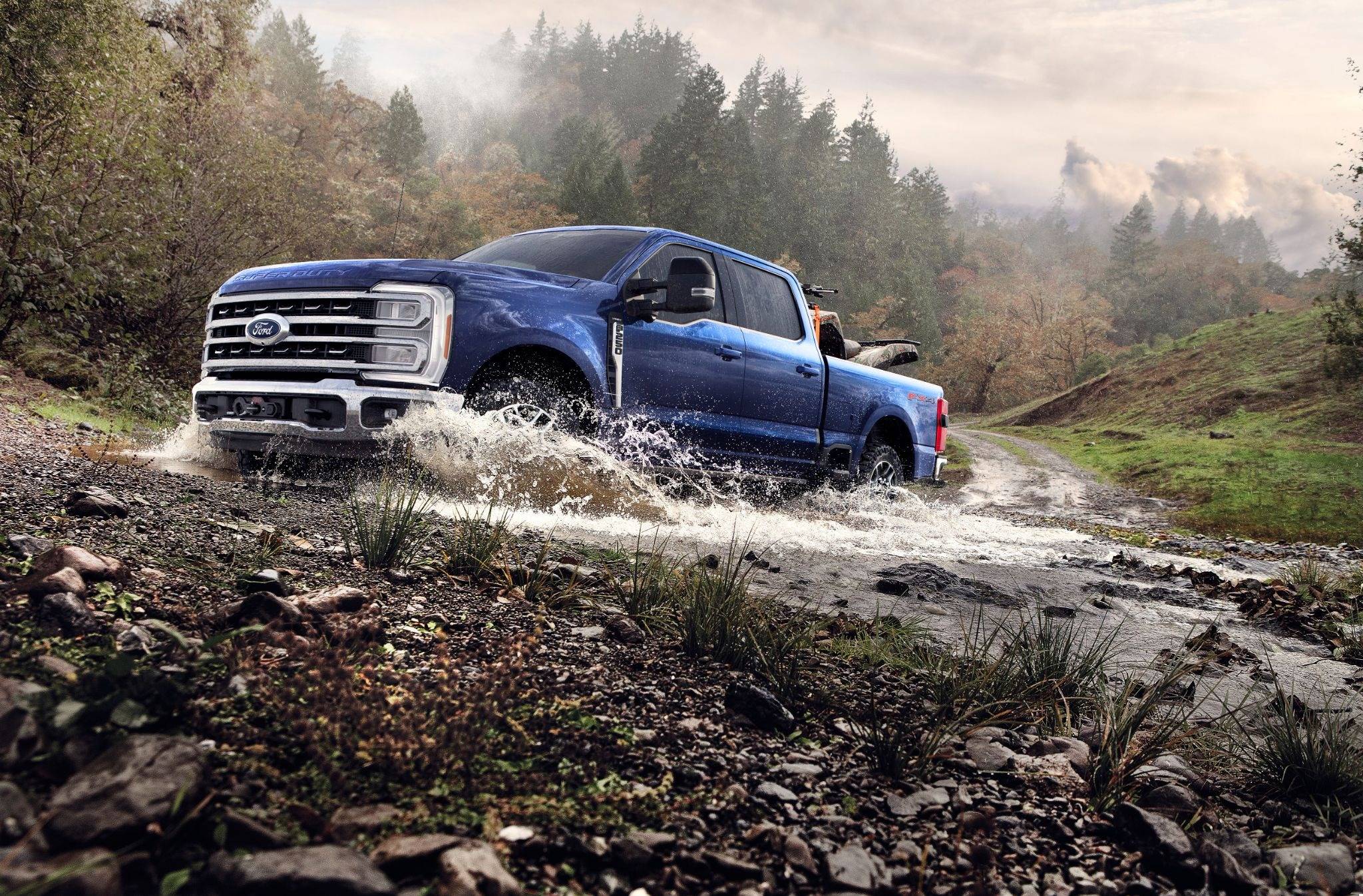
Island Driving Analysis: Oahu Realities
Driving a heavy-duty fleet truck on Oahu requires balancing power with physical dimensions.
Highway Climbs & Heavy Hauling
Crossing the Koolau Range via the H-3 or climbing up the Pali Highway requires high sustained torque. Both Super Duty trucks equipped with either the 7.3L Gas V8 or 6.7L Power Stroke® Diesel pull steep grades without transmission gear-hunting. However, the F-350's stiffer rear spring rates keep the headlights level and the steering firm when hauling dense material like wet concrete, stone, or iron beams up steep climbs around Tantalus or Pacific Palisades.
Urban Maneuverability & Parking
Navigating congested routes along Nimitz Highway during morning rush hour or fitting into job site staging areas in downtown Honolulu requires patience. Here, the F-250 SRW and F-350 SRW hold a clear physical advantage over the F-350 DRW. The single rear wheel model fits inside standard parking stalls and narrow city lanes. Drivers operating an F-350 dually must plan routes carefully, accounting for extra rear width when making tight right turns off Kamehameha Highway or entering compact parking lots.
Expert Reviews & Industry Insights
Automotive reviewers consistently highlight the engineering depth built into Ford's Super Duty platform.
Edmunds
According to independent road testing from Edmunds:
"The diesel V8 generates immense power and torque... Conventional towing capacity measures 20,000 pounds, while maximum gooseneck/fifth-wheel capacity is 22,800 pounds. Additionally, the F-250 Super Duty will carry up to 4,260 pounds of payload when it is properly equipped."
Car and Driver
Evaluating overall work capacity and engine choices, Car and Driver reported:
"The Super Duty's maximum conventional towing capacity sits at 30,000 pounds, while its max gooseneck tow capacity is an unbelievable 40,000 pounds. Payload maxes out at a staggering 8000 pounds... Ford offers four different engines on the Super Duty line, starting with a 6.8-liter V-8 that makes 405 horsepower and 445 pound-feet of torque."
MotorTrend
Highlighting heavy-duty trailering tech and chassis performance, MotorTrend observed:
"The Ford Super Duty is an absolute workhorse of a truck, offering class-leading power and capabilities across its trim lineup. With the available High Output 6.7-liter Power Stroke turbo-diesel, driver confidence remains high whether pulling heavy equipment trailers or hauling full payloads up steep inclines."
Lifestyle & Utility Fit: Which Super Duty Suits Your Operation?
Select the Ford F-250 if:
- You run an active trade business: General contractors, electricians, plumbers, and residential landscapers who haul tools, minor payloads, and utility trailers under 15,000 lbs.
- Your truck serves double duty: You need a single vehicle that handles weekday job sites and weekend recreation, like hauling surfboards to the North Shore, launching a boat in Hawaii Kai, or tailgating with family.
- Urban access is vital: Your routes frequently require driving through narrow Honolulu streets and tight commercial parking structures.
Select the Ford F-350 if:
- You manage heavy construction or industrial transport: Masonry contractors, heavy equipment movers, and fleet operators who regularly carry bed payloads exceeding 4,000 lbs.
- You pull heavy fifth-wheel or gooseneck equipment: Operators pulling heavy excavators, skid steers, or multi-car flatbeds across the island on a daily basis.
- You require maximum payload headroom: You need to install heavy permanent aftermarket equipment, such as crane beds, heavy service bodies, or large dump beds, without exceeding vehicle GVWR limits.
Upgrade Your Commercial Fleet at Cutter Ford in Aiea, HI
Choosing between the F-250 and F-350 comes down to analyzing your exact payload demands, trailer weights, and daily routes across Oahu. At Cutter Ford, our commercial vehicle team is here to help you configure the exact Super Duty trucks your business requires.
Explore our comprehensive selection of New Ford Trucks to test drive the latest Super Duty models, or browse our dependable Used Truck Inventory for budget-friendly fleet additions. Our dedicated commercial finance team makes upgrading seamless, offering flexible commercial financing solutions tailored to businesses of all sizes and credit histories. Get started today by completing our secure Online Finance Application.
To keep your fleet operating at peak performance, our factory-certified technicians at our service center handle everything from routine maintenance to heavy diesel repair. Easily Schedule Service Online to keep your work trucks on the road and earning for your business.
Ready to test drive the F-250 or F-350? Call our sales team directly at (808) 204-9444 or visit our showroom located at 98-015 Kamehameha Hwy, Aiea, HI 96701. Experience authentic local service and bring the power of Ford Super Duty to your business fleet today!