


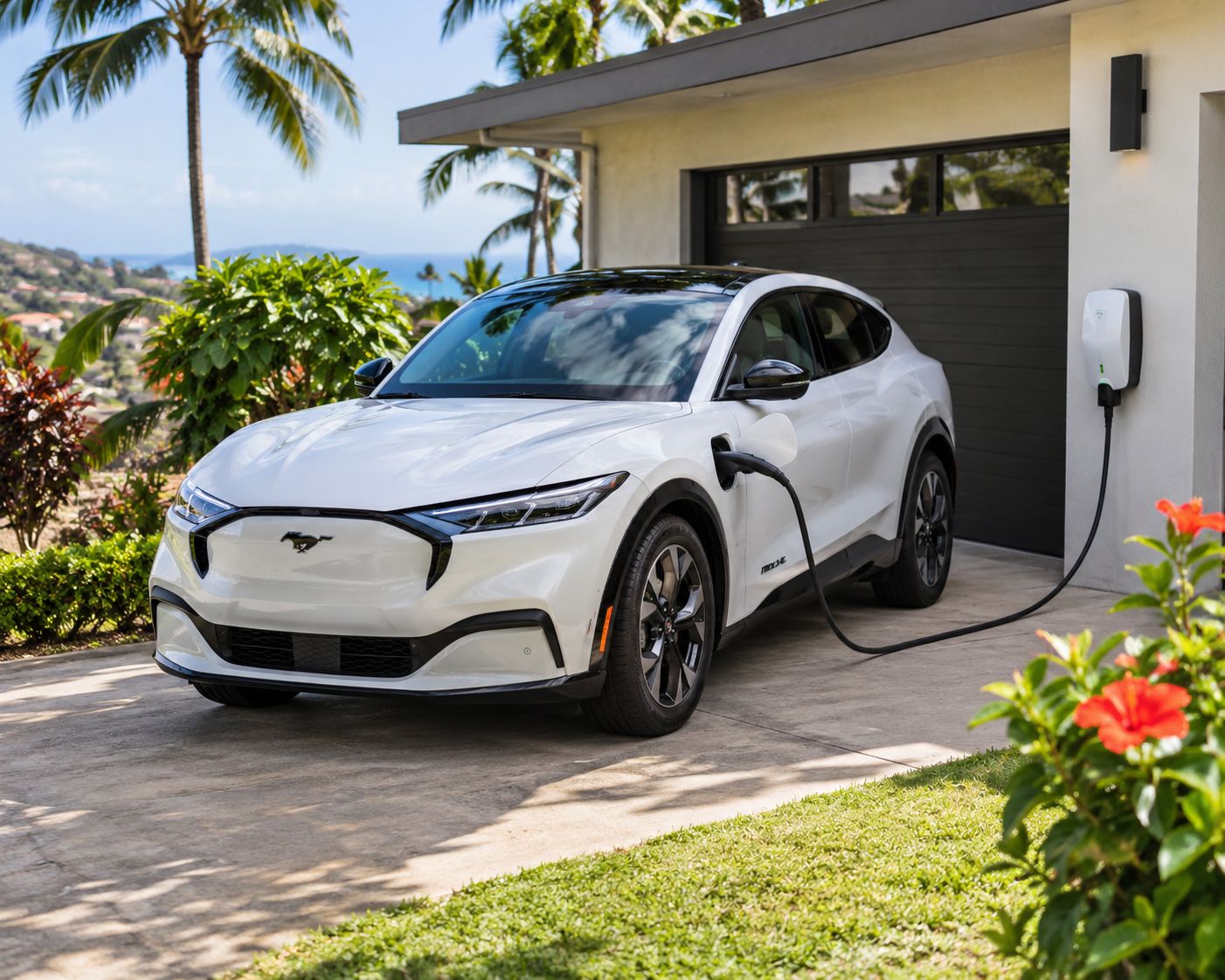
Thinking about driving electric around Oahu? Here is a friendly guide to charging at home before you pick out your next Ford.
One of the most common questions local drivers ask us is simple: Can I charge my EV right at home, and what will that do to my electric bill? Here on Oahu, the answer really depends on your daily commute, where you park, and your home's setup. Since island electricity rates are unique, it helps to understand what charging costs look like before making the switch from gas.
Here at Cutter Ford in Aiea, we want you to feel completely confident and at home with your EV choices. Whether you are eyeing a Ford Mustang Mach-E or just starting your research, getting a feel for home charging will help you find the perfect match for your lifestyle.
How Does Home EV Charging Work on Oahu?
Charging your electric vehicle at home is as simple as plugging in your phone at night. You just connect it, choose your settings, and let it top up while you relax. Most island drivers look at two main options: Level 1 and Level 2.
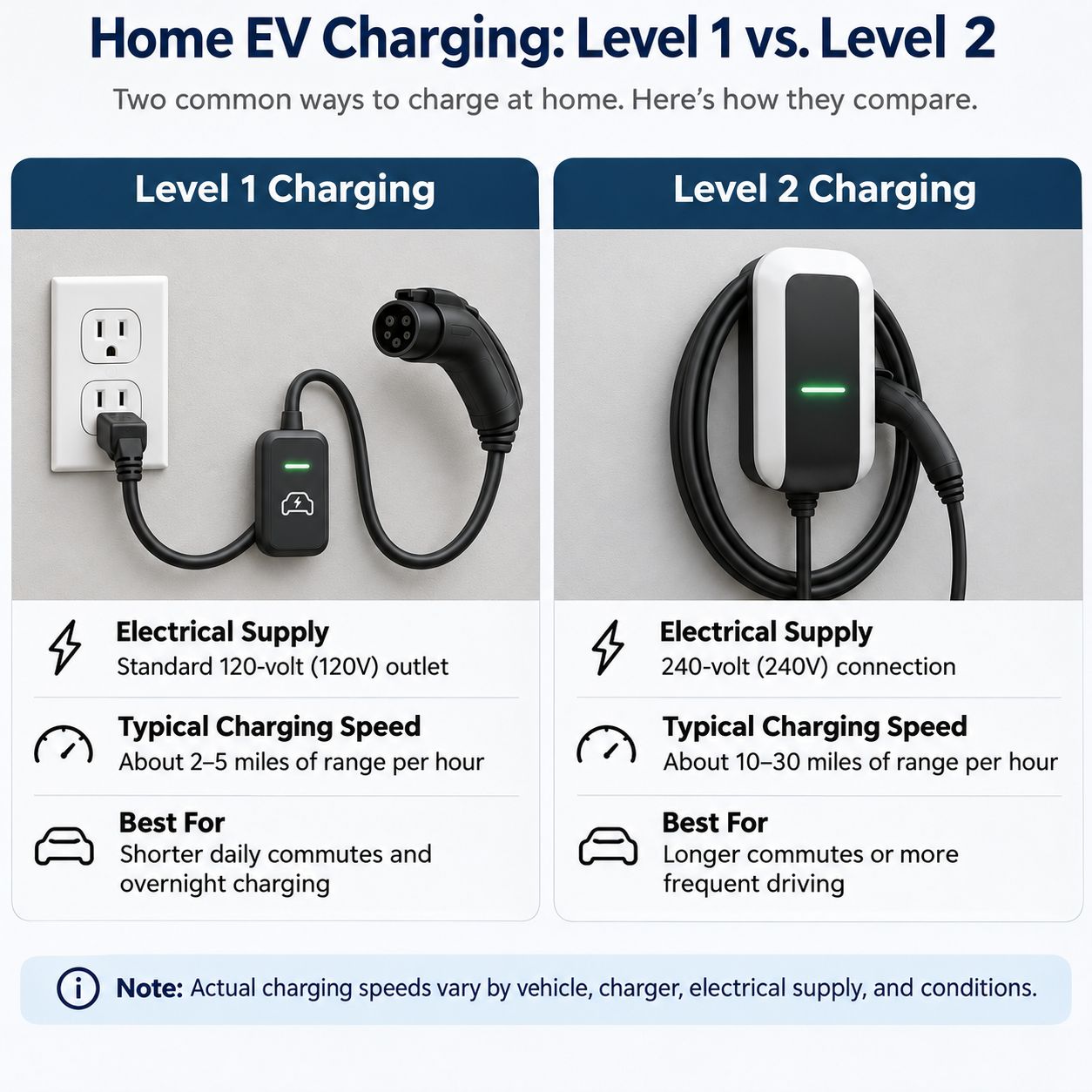
Level 1 uses a regular 120-volt wall outlet, while Level 2 uses a 240-volt setup for a faster charge. You do not always need the fastest charger available—if you are just cruising between Aiea and Honolulu, a simple overnight charge might be all you need. If you regularly drive all across the island or spend a lot of time on the road, Level 2 could be the way to go.
It really comes down to how many miles you cover during your daily island drives!
Level 1 vs. Level 2 EV Charging: Which Is Right for Your Home?
Here's how the two options compare.
| Feature | Level 1 Charging | Level 2 Charging |
|---|---|---|
| Electrical supply | Standard 120V outlet | 240V connection |
| Typical charging speed | About 2–5 miles of range per hour | About 10–30 miles of range per hour |
| Installation | May use an existing suitable outlet | Usually requires electrical installation |
| Ideal use | Shorter daily commutes and overnight charging | Longer commutes or more frequent driving |
| Upfront setup | Usually simpler | Depends on equipment and electrical work |
Charging speeds vary by vehicle, charger, electrical supply, and conditions. Figures are general estimates from the U.S. Department of Energy.
Level 1: A Simple Starting Point
If your Ford EV comes with a Level 1 charging cord and you have a grounded outlet near your parking spot, you might be ready to go without installing extra equipment. For example, if you drive 20 to 30 miles a day, letting it charge overnight will usually keep your battery ready for the next day's adventures.
Just to be safe, it is always a good idea to have a licensed electrician check that your outlet and wiring can handle continuous charging. We recommend staying away from basic extension cords or quick DIY fixes!
Level 2: Better for Drivers Who Need Faster Charging
Level 2 charging is fantastic if your household does a lot of driving, shares one charger between two cars, or prefers quick top-ups. It brings a lot of convenience when your schedule gets busy—instead of waiting through the night, you can get a big boost in range in just a couple of hours.
That said, Level 2 is not a must for everyone. You can take a look at the U.S. Department of Energy's home EV charging guide to figure out what fits your daily driving best.
How Much Does It Cost to Charge an EV at Home in Hawaii?
Electricity rates are a key part of planning your budget here in Hawaii. Even though you are skipping the gas station, the power used for charging will show up on your monthly electric bill. You can get a clear estimate by looking at these three factors:
- Your vehicle's energy consumption: How many kilowatt-hours (kWh) it uses to travel a certain distance.
- Your daily mileage: How much driving you need to replace through charging.
- Your electricity rate: What your household pays per kWh, including applicable charges.
Here's a simple example. Suppose an electric vehicle uses 30 kWh to travel 100 miles. If you drive 30 miles a day, the vehicle would use approximately 9 kWh for that distance.
Estimated driving energy cost = 9 kWh × your electricity rate per kWh
Keep in mind that the power drawn from your home outlet will be slightly higher since charging has a tiny bit of energy loss. Your efficiency will also shift depending on traffic, air conditioning, hills, and driving style. This simple formula gives you a much better picture of your actual costs than a general estimate!
Does Charging at Night Save Money on Oahu?
Not always! Hawaiian Electric's residential charging guidelines currently put new single-family homes on Schedule R. Older time-of-use plans are closed to new sign-ups, so charging late at night does not automatically mean lower rates for every Oahu home.
Before setting up a night charging routine, double-check your current plan and review Hawaiian Electric's residential EV charging guidance.
If you have home solar or battery storage, charging during sunny daytime hours might make the most sense. Chatting with your solar provider can help you find the sweet spot for your energy system and daily routine.
What Does Installing a Home EV Charger Involve?
If you are leaning toward Level 2 charging, start by having your home's electrical panel checked out before purchasing any gear. A licensed local electrician can confirm if your panel has room for the new charger or if a quick upgrade is needed first.
Installation planning should address:
- Electrical capacity: Can your panel and available service support the intended charging load?
- Parking location: How far is the charging spot from your electrical panel?
- Charger compatibility: Does the equipment use the correct connector for your Ford?
- Outdoor conditions: Is the charger suitable for exposure to rain, sunlight, and salt air?
- Permits and safety: What electrical work and approvals are required?
Here on Oahu, installing a charger often involves permits with the City and County of Honolulu. Hawaiian Electric recommends working with a licensed electrician and getting a few estimates upfront. Mounting a charger right next to your main panel is usually straightforward, while older homes or longer wiring runs across the property might take a bit more preparation.
Feel free to check out the Hawaiian Electric installation checklist before calling your electrician. We want to make sure your transition to EV driving is smooth, seamless, and completely stress-free from day one!
Can You Own a Ford EV if You Live in an Apartment or Condo?
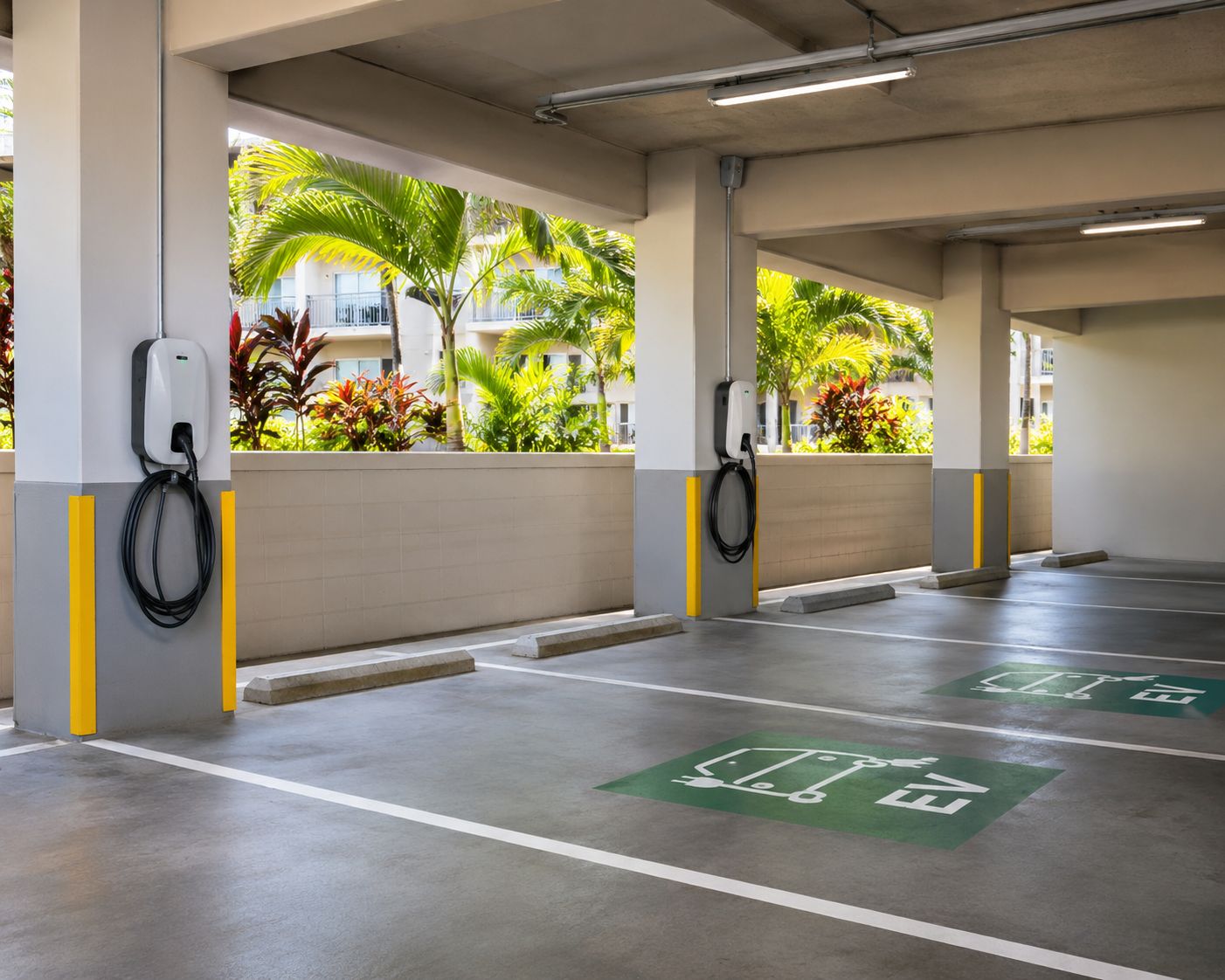
Absolutely! You just want to look at your charging options early on. If you live in a condo or apartment in Honolulu, Pearl City, or anywhere around Oahu, the key step is getting approval and checking how charging is set up in your building.
Some buildings have shared stations, some let you add a charger to your stall, and others are still working on EV options. Before bringing home an EV, reach out to your HOA or building manager to ask:
- Is EV charging allowed in assigned parking spaces?
- Are shared chargers already available?
- Who pays for electricity and equipment maintenance?
- Would a personal charger require approval or electrical upgrades?
- Are there nearby public chargers that fit your normal schedule?
If you are renting, you will want to talk things over with your landlord or property manager too. Hawaiian Electric has a handy EV charging guide for apartments, townhouses, and condos that breaks down how setups and billing usually work.
Having access to a reliable charger at home or work makes owning an EV a breeze. Relying mostly on public chargers is totally doable too—it just takes a little extra planning!
What About Public EV Charging Around Oahu?
Even with home charging, it is great knowing where you can plug in while out enjoying the island. Public Level 2 stations are perfect when you are parked for lunch or running errands for a few hours. DC fast chargers get you back on the road quickly when you are taking a longer drive around the island.
Before pulling up, it helps to check that the station is active, takes your vehicle connector, and fits your preferred payment method. You can easily find charging spots across Oahu using the U.S. Department of Energy's Alternative Fueling Station Locator.
Just remember that public charging prices can differ from home electric rates, and some spots have small parking or idle fees.
Choosing a Ford EV That Fits Your Charging Routine
Charging at home is just one piece of finding your perfect ride. If your routine includes commuting on H-1, running errands around Pearl City, or taking weekend trips up to the North Shore, think about how much battery range will make your week feel effortless.
The Ford Mustang Mach-E is a fantastic option to explore! Charger setups, battery sizes, and features can vary across different trims and years. If you are leaning toward a plug-in hybrid instead, we can walk you through how its battery and gas engine work together for your driving routine.
Our team at Cutter Ford is always here to help you find the right Ford for your lifestyle. Browse our new Ford inventory online to check out our current lineup, or give us a shout directly with any questions!
Plan Your Vehicle Budget Alongside Your Charging Setup
When comparing an electric vehicle to gas or hybrid options, it helps to look at the whole picture—vehicle financing, charging gear, any home electrical prep, and your typical weekly driving.
Looking to trade in your current car? You can start estimating its value right away with our easy Value Your Trade tool.
Whenever you are ready to talk numbers, feel free to visit our Finance Center or fill out our online finance application. (Note: home charger installation cost quotes are handled separately by your electrician).
Explore Your Ford Options at Cutter Ford in Aiea
Going electric is so much easier when you know exactly how charging fits into your day-to-day life. For many Oahu drivers, a standard outlet is plenty; for others, a Level 2 home charger or a mix of home and public charging works best.
The best way to start is simply taking a look at your parking, your daily commute, and your home energy setup.
Come visit our friendly team at Cutter Ford, 98-015 Kamehameha Hwy, Aiea, HI 96701, or give us a call at (808) 564-9777. We would love to talk story, show you our Ford line-up, and help answer any questions along the way!