


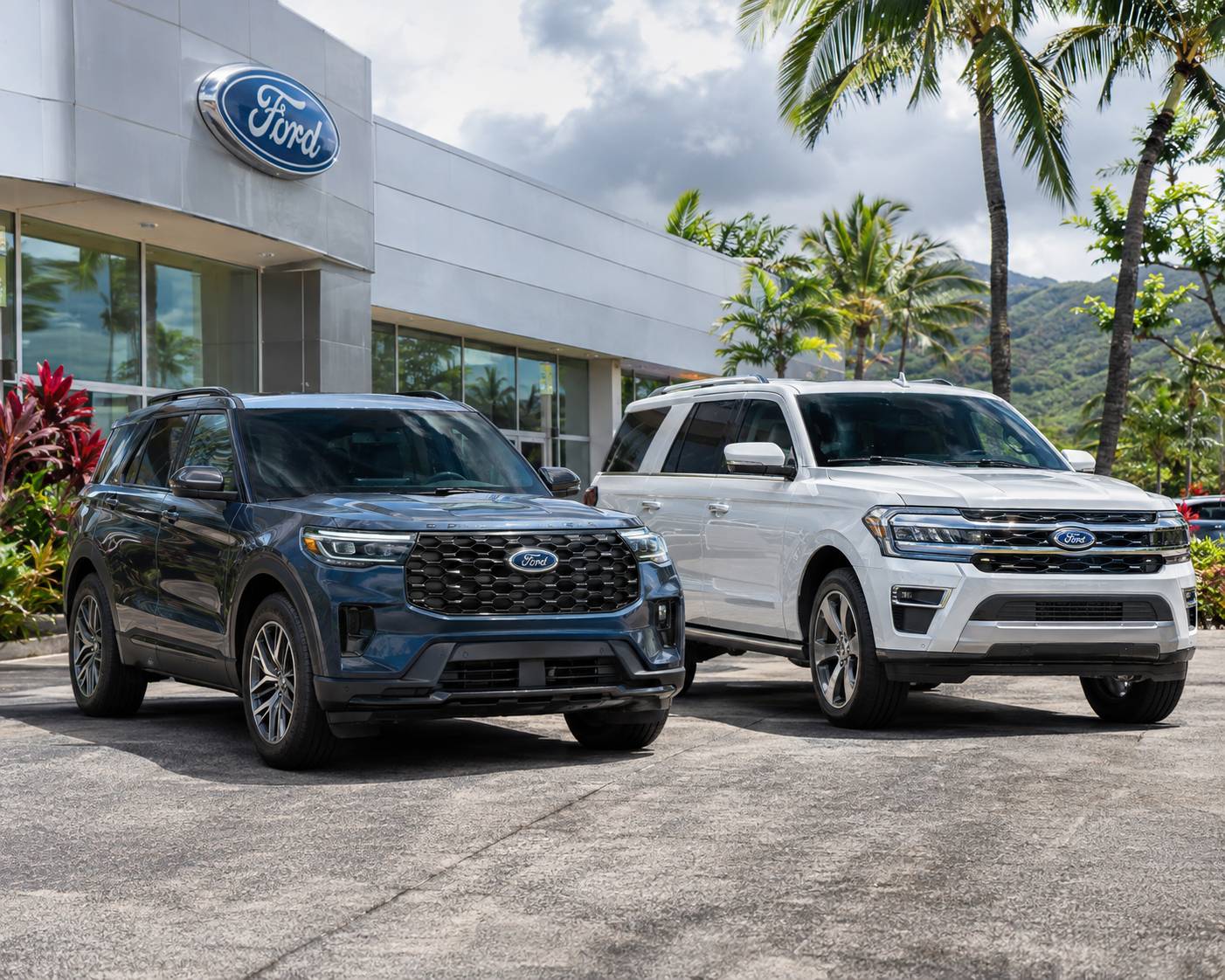
Need more room for your family? Here's how to choose a used three-row SUV that fits your passengers, cargo, and everyday driving on Oahu.
A three-row SUV sounds like the perfect family vehicle until you discover that not every third row offers the same amount of space. Some are better suited to children, while others provide enough room for adults. Cargo space can also change significantly when all the seats are occupied.
For families on Oahu, choosing a used three-row SUV means looking beyond the seating capacity. You'll want something comfortable for school runs, manageable in Honolulu traffic, and practical when the whole family heads to the beach.
At Cutter Ford in Aiea, we offer used SUVs from Ford and other manufacturers. Whether you're considering an Explorer, Expedition, or another family SUV, we're here to help you compare the features that matter before deciding which vehicle fits your needs.
Do You Really Need a Three-Row SUV on Oahu?
A third row can make everyday travel easier when your household regularly carries more than five people. It also gives you flexibility when relatives visit, children bring friends along, or you need additional passenger seats for a weekend outing.
But extra seating isn't always necessary. If most of your driving involves two adults and a couple of children, a smaller SUV may provide enough room while being easier to park and maneuver.
Think about your typical week before choosing a vehicle. A family driving through downtown Honolulu every day may have different priorities than one regularly transporting several passengers from Ewa Beach to school, sports activities, and weekend events.
The important question isn't simply how many people the SUV can carry. It's how comfortably the vehicle accommodates everyone while leaving enough space for the things you're bringing along.
Which Used Ford SUVs Offer Third-Row Seating?
The Ford Explorer and Ford Expedition are two models worth considering when shopping for a used three-row Ford SUV. Both offer additional seating, but their size, available configurations, and everyday driving characteristics differ.
| Feature | Ford Explorer | Ford Expedition |
|---|---|---|
| Vehicle category | Midsize SUV | Full-size SUV |
| Third-row seating | Available in three-row configurations | Three-row configurations |
| Passenger capacity | Commonly six or seven, depending on configuration | Commonly seven or eight, depending on configuration |
| Cargo flexibility | Foldable rear seating | Larger cargo area with foldable seating |
| Everyday driving | Easier to manage in tighter spaces | Requires more parking and maneuvering room |
| Worth considering for | Families balancing space and daily commuting | Families regularly carrying more passengers or bulky gear |
Seating capacity and equipment vary by model year, trim, and individual vehicle. Always verify the exact SUV's configuration.
Ford Explorer: A Balance of Family Space and Everyday Driving
The Ford Explorer is worth considering if you need three rows without moving into a full-size SUV. Depending on the model year and seating configuration, it can accommodate six or seven passengers, with a foldable third row for additional cargo flexibility.
That makes the Explorer useful for families who regularly switch between carrying passengers and transporting sports equipment or shopping bags. Its midsize dimensions may also be more manageable in Honolulu parking structures than those of a larger Expedition.
Before buying a used Explorer, check whether it has second-row captain's chairs or a bench seat. Captain's chairs can provide a convenient walkway to the third row, while a bench may offer an additional seating position. The right choice depends on your family's passenger and child-seat needs.
Ford Expedition: More Room for Larger Families
If you regularly travel with a larger group, the Ford Expedition offers a full-size alternative. Its three-row layout and larger body can provide additional passenger and cargo room, particularly when comparing extended-length Expedition MAX configurations.
An Expedition can be useful for families transporting luggage, beach equipment, or recreational gear. However, the extra size is worth considering carefully if your daily routine includes narrow parking stalls or crowded city streets.
During a test drive, pay attention to visibility, turning space, and how comfortably you can enter and exit the vehicle. If your regular parking space is tight, confirm that the SUV fits before making a decision.
What About Other Used SUV Brands?
You don't have to limit your search to Ford. Our used vehicle inventory includes vehicles from other manufacturers, with availability changing as inventory is updated.
Depending on current listings, you may be able to compare three-row SUVs from brands such as Toyota, Honda, or Chevrolet. Models like the Highlander, Pilot, and Traverse are worth researching when comparing seating arrangements and family usability.
The most helpful comparison is between the actual vehicles available, not just the brand names. Model year, trim, maintenance history, and seating configuration can make a meaningful difference.
Third-Row Comfort, Car Seats, and Cargo Space
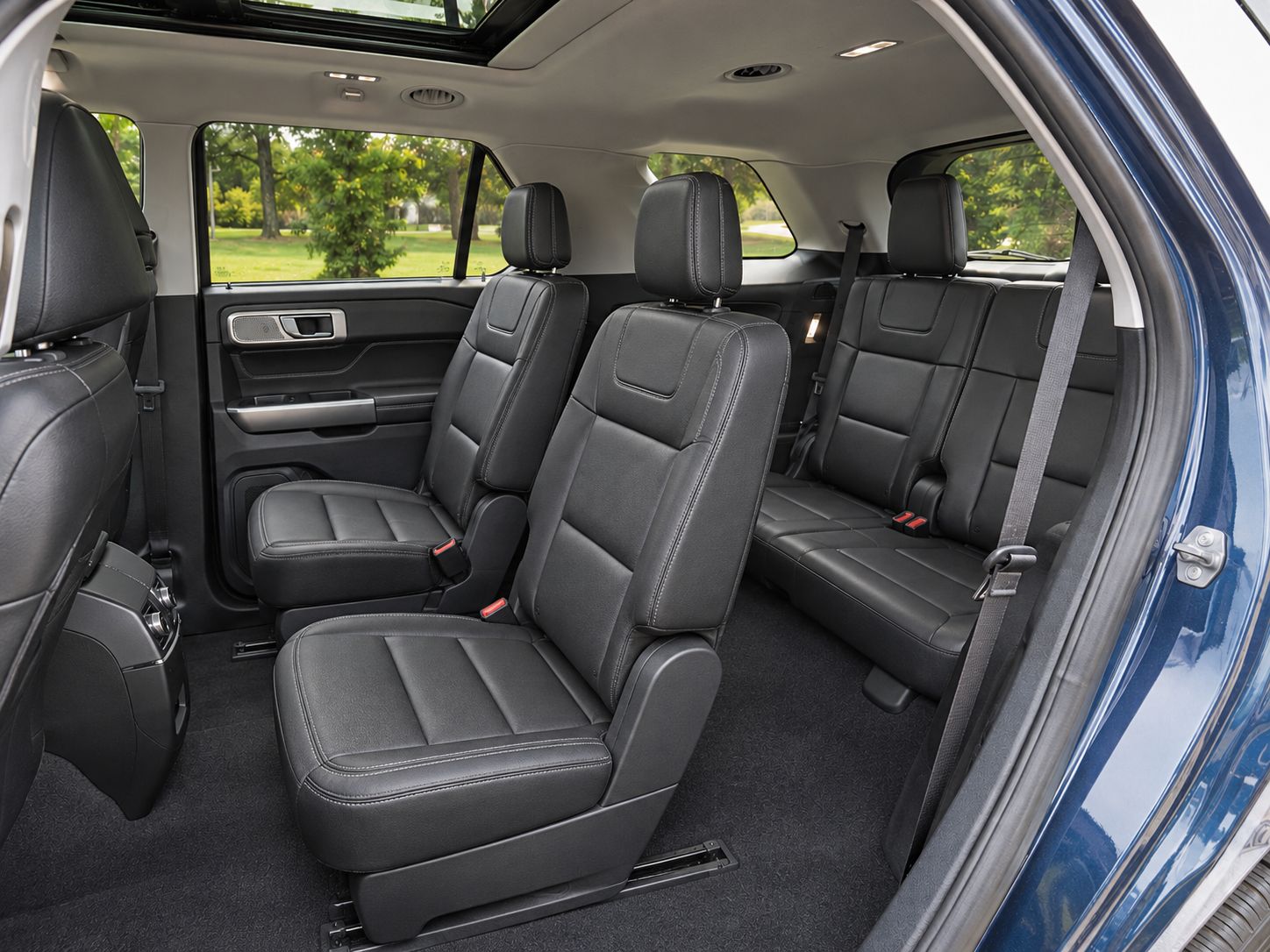
One of the biggest mistakes when shopping for a family SUV is assuming that every advertised seating position will be equally comfortable.
A vehicle may technically seat seven people, but that doesn't tell you how much legroom the third row provides or how easily passengers can get there. If grandparents, teenagers, or other adults will regularly use those seats, have them try the space before purchasing.
Check How Easily Passengers Reach the Third Row
Some three-row SUVs have second-row captain's chairs with a center walkway. Others use a bench seat that folds or slides to provide access.
Neither arrangement is automatically better. Captain's chairs may make movement between rows easier, while a bench can provide an additional passenger position.
If your family uses car seats, check whether installing them in the second row affects access to the third row. Some seating arrangements make it difficult to fold or slide a seat once a child restraint is installed.
Make Sure Your Child Seats Fit Properly
If you're shopping with young children, bring the car seats you currently use and check their compatibility with the vehicle you're considering.
Look for the appropriate lower anchors, tether anchors, and seating positions. Not every seat in a three-row SUV has the same child-restraint installation options, and the third row may have different requirements from the second row.
The National Highway Traffic Safety Administration's car seat installation guide explains why both the vehicle owner's manual and the child-seat manufacturer's instructions matter.
Never assume a seating position supports a particular child restraint simply because it has a seatbelt. Confirm the approved installation method and make sure the seat can be secured correctly.
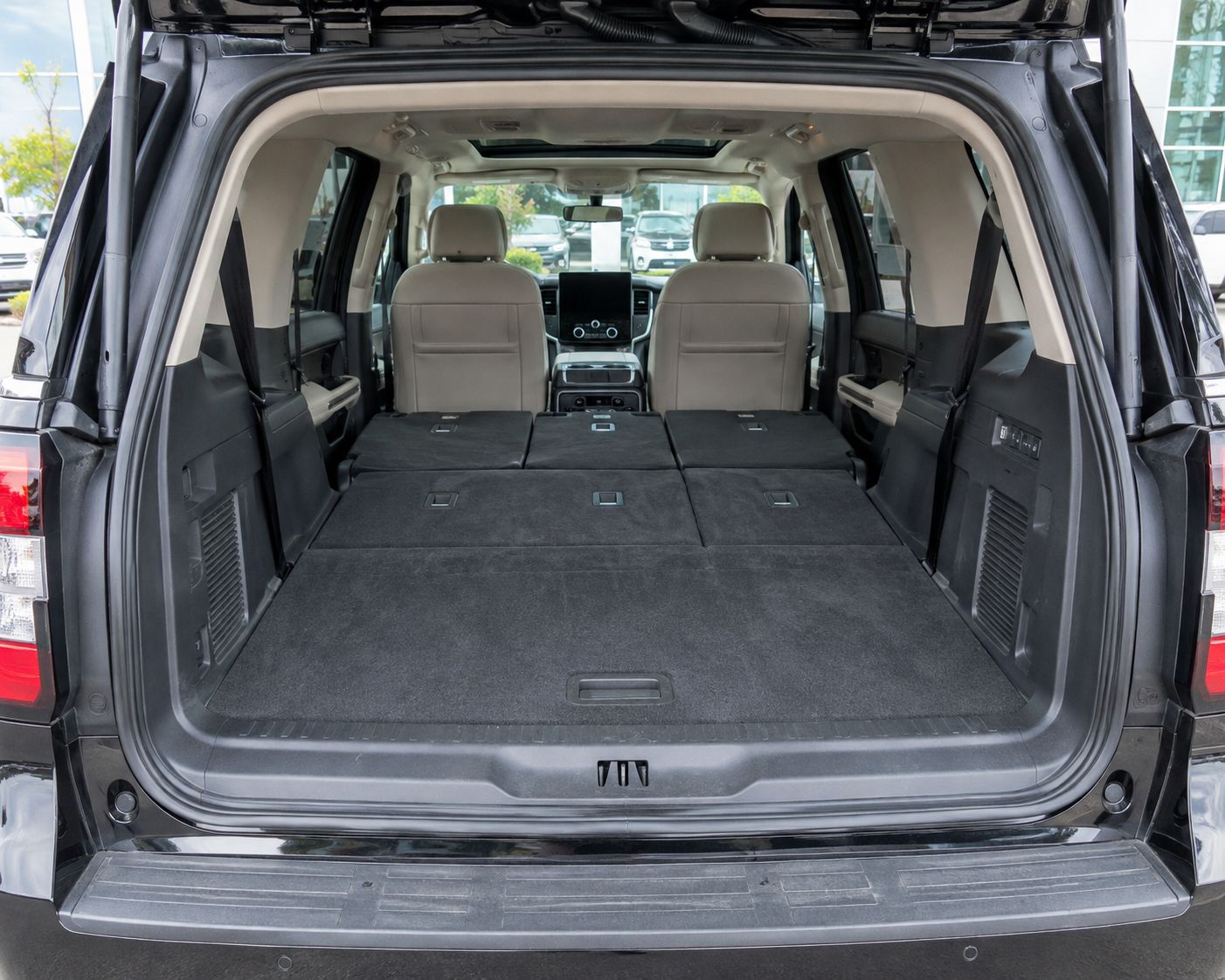
See How Much Cargo Space Remains With Every Seat in Use
A three-row SUV may have plenty of cargo capacity with its rear seats folded, but the usable space behind an occupied third row can be much smaller.
If you regularly carry a stroller, cooler, folding chairs, or sports equipment, test how those items fit with all passengers seated. Don't rely only on a published cargo-capacity figure.
Also check how easily the rear seats fold and return to their upright positions. Some used SUVs have manual folding mechanisms, while others may include power-operated seats. Verify that every mechanism operates correctly before purchasing.
Will a Larger SUV Fit Your Daily Oahu Routine?
A three-row SUV can make family travel more comfortable, but size affects your everyday driving experience.
In Honolulu and Waikiki, parking structures and narrow stalls can make a full-size SUV less convenient. If you regularly park in a condominium garage or use a specific parking space at work, check the vehicle's dimensions and available clearance.
Fuel consumption is another consideration. Larger SUVs generally require more energy to move, but actual fuel economy depends on the engine, drivetrain, vehicle condition, and driving habits.
Compare the EPA fuel economy estimates for the exact model year and configuration using FuelEconomy.gov. This provides a more useful comparison than assuming all three-row SUVs have similar running costs.
For families that spend plenty of time in H-1 traffic, everyday comfort also matters. During your test drive, check the air conditioning, rear-seat vents, visibility, and how the SUV responds during ordinary acceleration and braking.
What to Inspect Before Buying a Used Family SUV
A used SUV deserves a careful inspection regardless of its model or manufacturer. This is particularly important when the vehicle will regularly carry children and other family members.
Hawaii's coastal environment can expose vehicles to moisture and salt, making visible corrosion and signs of water intrusion worth checking.
Start with the vehicle's maintenance history and overall condition. Ask about available service records, past repairs, and the information provided in its vehicle history report.
Pay particular attention to the features your family will use regularly:
- Seatbelts and buckles: Check that every seating position has functional restraints.
- Child-seat anchors: Confirm the correct locations and any restrictions in the owner's manual.
- Rear-seat access: Test the folding and sliding mechanisms used to reach the third row.
- Air conditioning: Make sure the system provides adequate cooling throughout the cabin.
- Cargo-area condition: Look for moisture, unusual odors, or damage around the rear floor and storage compartments.
- Tires and brakes: Review their condition and ask about available maintenance documentation.
You should also check the vehicle's VIN through the NHTSA recall lookup to identify any reported unrepaired safety recalls. A VIN search doesn't provide a complete history of previously completed repairs, so ask for additional documentation when appropriate.
Used Three-Row SUV Buying Checklist
When you're ready to compare vehicles, a simple checklist can help you focus on practical needs rather than getting distracted by features you may rarely use.
- Confirm the seating capacity. Check whether the exact SUV accommodates six, seven, or eight passengers.
- Test third-row access. Make sure everyone in your household can enter and exit comfortably.
- Check your car seats. Verify approved installation positions and compatibility.
- Measure usable cargo space. Test the items you regularly transport with all required seats upright.
- Consider parking. Make sure the SUV fits your usual garage, driveway, or parking stall.
- Review the vehicle's history. Check maintenance records, previous damage information, and open recalls.
- Take a realistic test drive. Evaluate comfort, visibility, braking, and maneuverability on everyday roads.
If you're comparing several vehicles, keep notes about the seating arrangement and features that matter most. An SUV that looks spacious online may feel very different once your family is seated inside.
Explore Used Family SUVs at Cutter Ford in Aiea
Choosing a used three-row SUV is about finding enough room for the people and activities that are part of your everyday life. The right vehicle should be comfortable for your passengers while remaining practical for the roads and parking situations you encounter around Oahu.
At Cutter Ford, we can help you compare used SUVs from Ford and other manufacturers based on current availability. Whether you're looking at an Explorer, an Expedition, or another family vehicle, we encourage you to review the seating configuration and take a test drive before deciding.
Start by browsing our used SUV inventory. If you're replacing your current vehicle, our Value Your Trade tool can help you begin estimating its trade-in value, while our Finance Center provides information about available financing options.
Visit us at 98-015 Kamehameha Hwy, Aiea, HI 96701, or call (808) 564-9777 to ask about our current used SUV selection or arranging a test drive. We'll help you explore the options that make sense for your family.