


Buying a Used Car From a Dealer in Hawaii: 5 Steps and Your Warranty Rights
Buying a used car from a dealer in Hawaii takes more than finding a vehicle that fits your budget. You also need to understand its history, check for signs of wear from island conditions, and know which warranty protections apply before signing.
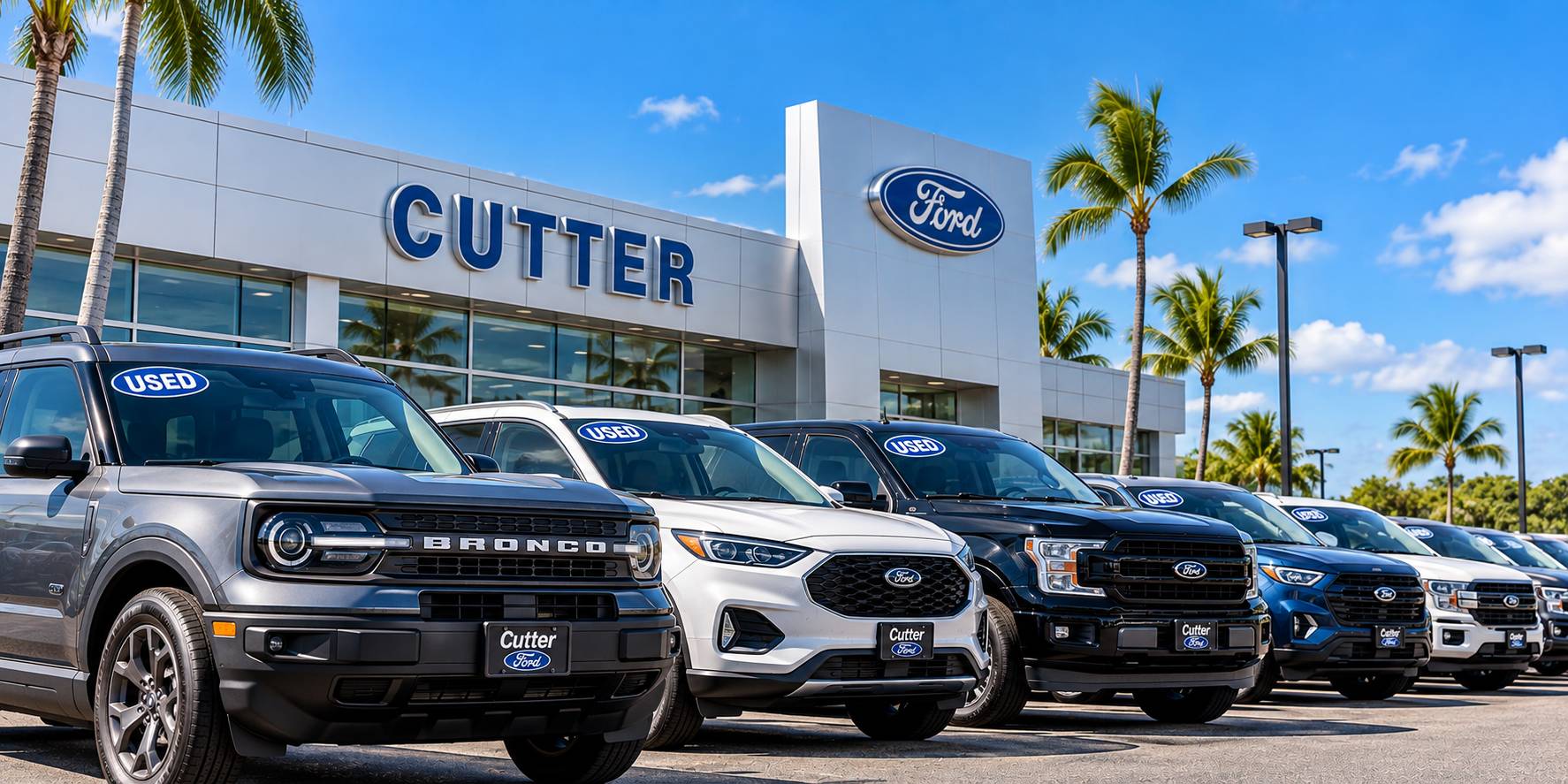
At Cutter Ford in Aiea, we help Oahu drivers explore used cars, trucks, and SUVs from Ford and other manufacturers. Whether you're buying your first car or replacing your daily commuter, these five steps can help you make a more informed decision.
Step 1: Set Your Budget and Compare Financing Options
Before shopping, figure out what you can comfortably spend on the vehicle and its ongoing expenses.
Your budget should account for:
- The vehicle's purchase price
- Applicable taxes, registration, and title costs
- Insurance premiums
- Fuel and routine maintenance
- Potential repairs and unexpected expenses
Ask for an itemized out-the-door price so you understand the total purchase cost before committing. This helps you compare vehicles without overlooking additional charges.
If you're financing, consider getting preapproved through a bank or credit union. According to the Consumer Financial Protection Bureau, comparing loan offers before visiting a dealership can help you evaluate financing terms more effectively.
We also offer financing resources through our Cutter Ford Finance Center. You can review the process and use our online finance application to get started. Financing terms and approval depend on lender requirements and your individual circumstances.
The important part is understanding the total borrowing cost, not just the monthly payment.
Step 2: Check the Vehicle's History and Physical Condition
A used car can look great in photos and still have problems that aren't immediately visible.
Before committing to a vehicle, ask for its vehicle identification number (VIN) and review its history.
The National Motor Vehicle Title Information System provides access to approved vehicle history report providers. These reports can help identify title brands, salvage records, and other available information.
You should also use the free NHTSA recall lookup to check for unrepaired safety recalls.
Remember that a clean vehicle history report doesn't guarantee a problem-free car. Not every accident or mechanical issue is recorded.
What to inspect on a used car in Hawaii
Oahu's coastal environment makes certain vehicle checks particularly important.
Pay attention to:
- Underbody corrosion: Look for excessive rust on exposed metal components, especially around the suspension and brake lines.
- Tires: Uneven wear may indicate alignment or suspension issues.
- Water intrusion: Damp carpeting, stains, and musty odors deserve closer investigation.
- Air conditioning: Test the system while parked and during the drive.
- Electronics: Check dashboard warning lights, windows, lights, and infotainment controls.
- Braking and handling: Listen for unusual noises and check whether the vehicle pulls to one side.
Take the vehicle for a test drive on local streets and, when practical, at highway speeds.
We recommend asking for an independent inspection before purchase. The Federal Trade Commission's used-car buying guidance explains why a vehicle history report is not a replacement for a mechanic's evaluation.
If an inspection identifies an issue, request a written repair estimate before deciding whether to proceed.
Step 3: Understand Hawaii's Used Car Warranty Protections
One of the most important things to understand when buying a used car from a dealer in Hawaii is that some used vehicles must come with warranty protection under state law.
Under Hawaii Revised Statutes Chapter 481J, qualifying used vehicles sold by dealers must include a written warranty covering specified major mechanical components that affect the vehicle's safety or use.
The law establishes different minimum warranty periods based on vehicle mileage.
For qualifying vehicles, the minimum periods are:
| Mileage at sale | Minimum warranty |
|---|---|
| Under 25,000 miles | 90 days or 5,000 miles |
| 25,000 to 49,999 miles | 60 days or 3,000 miles |
| 50,000 to 75,000 miles | 30 days or 1,000 miles |
Each warranty ends when either its time or mileage limit is reached, whichever happens first.
These protections do not apply to every used vehicle. Exemptions include certain older vehicles, higher-mileage vehicles, and other categories specifically identified in the law.
Can a dealer sell a used car "as is" in Hawaii?
Yes, but only under the conditions allowed by state law.
Hawaii's HRS §481J-3 restricts when dealers can sell vehicles "as is" and establishes disclosure requirements.
If a vehicle qualifies for mandatory warranty coverage, a dealer generally cannot eliminate those protections with a simple disclaimer.
Before purchasing, ask which state warranty protections apply to the specific vehicle.
Review the FTC Buyers Guide
Federal law also requires most used-car dealerships to display an FTC Buyers Guide on vehicles offered for sale.
The guide explains whether the vehicle is sold with a warranty or without a dealer warranty, along with relevant coverage information.
Review the Buyers Guide and compare it with the written purchase agreement. State-law warranty rights may apply regardless of how a general disclaimer is worded.
At our dealership, you can also explore Ford Blue Advantage certified pre-owned vehicles. This program offers eligible vehicles with certification requirements and program-specific warranty benefits. Ask us about the coverage applicable to an individual vehicle.
Step 4: Compare the Full Price, Trade-In, and Add-Ons
Once you've found a vehicle that passes your initial checks, compare its total purchase cost with similar vehicles.
Research comparable models with similar mileage, condition, and features. Pay attention to local Oahu listings rather than relying exclusively on mainland comparisons.
Ask the dealership to explain the complete out-the-door price, including all applicable charges.
If you're trading in your current vehicle, evaluate its value separately from the price of the car you're purchasing.
Our Value Your Trade tool provides a starting point for researching your vehicle's trade-in value. The final offer may depend on its condition and other factors.
You should also review optional products carefully.
Examples include extended service contracts, paint protection, and other vehicle protection products. Ask what each product covers, what it excludes, and how it affects your total cost.
Our Work Your Deal Online resource also lets you begin parts of the shopping process online, including selecting a vehicle and accessing trade-in and financing resources.
A manageable monthly payment matters, but it shouldn't distract you from the total amount you'll pay over the life of a loan.
Step 5: Review the Paperwork Before Signing
Before completing your purchase, carefully review every document. Confirm that the written terms match what you discussed with the dealership.
Your final paperwork review should include:
- Purchase agreement: Confirm the agreed vehicle price and itemized charges.
- Financing contract: Check the loan amount, annual percentage rate, term, and total payments.
- Buyers Guide: Confirm the warranty information matches the vehicle being purchased.
- Warranty documents: Understand what is covered and how to request repairs.
- Odometer disclosure: Verify the recorded mileage and applicable disclosure requirements.
- Trade-in paperwork: Confirm the agreed trade-in value and any remaining loan balance.
If financing is not yet final, ask whether the sale is conditional and what happens if a lender declines the proposed terms.
Don't rely on verbal promises about repairs, returns, or extra services. Request written confirmation of any agreed conditions.
Also ask how the title and registration process will be handled. Requirements and processing steps can vary, so refer to the City and County of Honolulu's motor vehicle registration guidance for current local procedures.
What If Something Goes Wrong After Buying?
If you discover a mechanical problem after purchase, review your warranty documents and contact the dealership promptly.
Keep a record of the issue, including the date it appeared, photographs where useful, and any repair-related communication.
For vehicles covered by Hawaii's used-car warranty law, specific repair obligations and consumer remedies may apply.
If you believe a dealer has violated those obligations, the Hawaii Regulated Industries Complaints Office provides consumer information and complaint resources.
Remember that manufacturer warranties, dealer warranties, service contracts, and state-required warranty protections are not necessarily the same. Understanding which coverage applies can help you determine your next steps.
Shop Used Cars in Aiea With Cutter Ford
Buying a used vehicle should begin with understanding what you're getting. Checking its history, arranging an independent inspection, reviewing warranty protections, and comparing the full purchase cost can help you avoid unpleasant surprises.
At Cutter Ford, we offer used vehicles from Ford and other manufacturers, along with financing and trade-in resources to help you explore your options.
Start by browsing our used vehicle inventory in Aiea. If you find a vehicle that interests you, contact our team to discuss its details or arrange a test drive.
Visit us at 98-015 Kamehameha Hwy, Aiea, HI 96701, or call our sales department at (808) 564-9777.
We're here to help you find a vehicle that fits your needs and make an informed decision before you buy.