


Buying a Used Truck in Hawaii: An Oahu Inspection and Buying Checklist
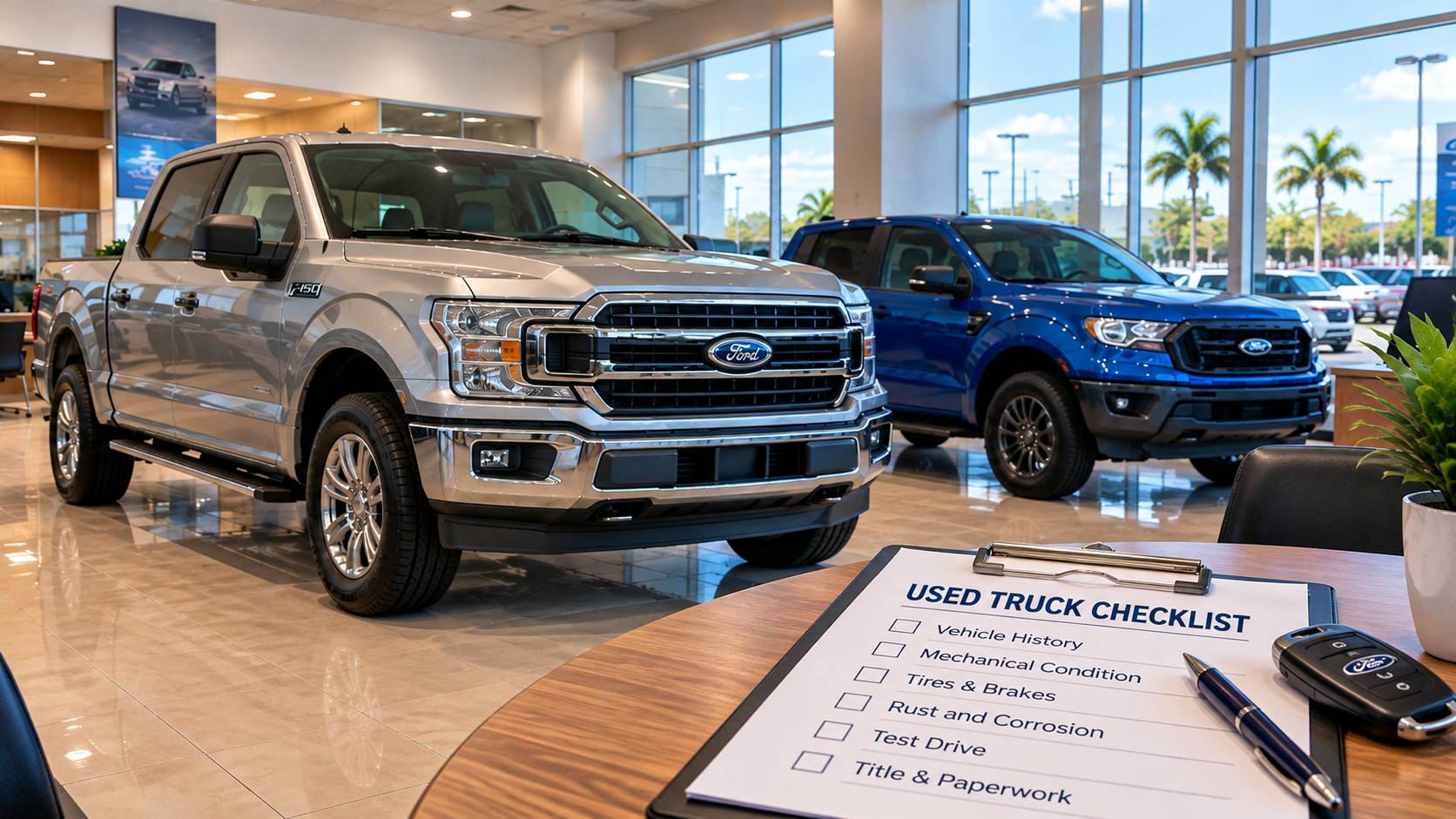
Buying a used truck in Hawaii can save you money, but choosing the wrong one can lead to expensive repairs. On Oahu, salt air, previous towing demands, and maintenance history all affect a truck's long-term condition.
At Cutter Ford, we help local drivers explore used pickups that fit their needs. Whether you're shopping for a daily driver, a family truck, or a work vehicle, knowing what to inspect can help you make a more informed decision.
Here's our practical checklist for buying a used truck in Hawaii.
1. Choose the Right Truck for Your Needs
Start by thinking about how you'll use your truck. Do you need something for daily commuting, weekend activities, towing, or commercial work?
Ford offers several truck options worth considering:
- Ford Maverick: A compact pickup for drivers who want everyday practicality and a manageable size.
- Ford Ranger: A midsize truck offering a balance of utility and maneuverability.
- Ford F-150: A full-size pickup suited to a range of hauling and towing needs.
- Ford Super Duty®: Heavy-duty pickups designed for more demanding work and towing applications.
Don't choose a truck based on size alone. Towing and payload capacities vary by engine, model year, drivetrain, and configuration.
Use Ford's official towing resources to research specifications for the truck you're considering.
If you're shopping for a business, explore our used commercial vehicles and consider how previous work-related use may have affected the truck.
2. Set a Realistic Budget
A used truck's purchase price is only part of its ownership cost.
Before shopping, account for:
- Registration, taxes, and insurance.
- Fuel and routine maintenance.
- Tire replacement and potential repairs.
- Financing costs, if applicable.
- Immediate maintenance identified during inspection.
A lower-priced truck isn't necessarily a better value if it needs major repairs soon after purchase.
Compare vehicles based on their condition and expected ownership expenses, not just their advertised prices.
If you have a vehicle to trade, our Value Your Trade tool can help you explore its estimated trade-in value.
3. Choose Where to Buy Your Used Truck
You can buy a used pickup from a franchise dealership, independent dealer, private seller, or auction.
Each option offers different advantages and considerations.
Franchise dealerships: Offer used vehicle inventory, financing resources, and potentially certified pre-owned options. However, not every vehicle is certified or covered by a warranty.
Independent dealerships: May carry different makes and models. Review each vehicle's condition, history, and written warranty terms carefully.
Private sellers: Can provide additional buying options, but you'll need to be particularly careful about verifying ownership and arranging an inspection.
Auctions: May have limited inspection opportunities or restrictive purchase terms. Review the auction's conditions before bidding.
The Federal Trade Commission requires covered used-car dealerships to display a Buyers Guide identifying important warranty information. You can learn more through the FTC's used-car buying guide.
At Cutter Ford, we offer used pickups from Ford and other manufacturers. Start by exploring our used truck inventory in Aiea.
4. Check the Vehicle's History
Before scheduling a test drive, ask for the vehicle identification number (VIN).
Use it to research the truck's history and identify potential concerns.
Three useful resources include:
- NHTSA Recall Lookup: Check for reported unrepaired safety recalls.
- NICB VINCheck: Search certain theft and salvage records reported by participating insurers.
- National Motor Vehicle Title Information System: Find approved vehicle history report providers.
Review the available records for accident damage, salvage or flood-related titles, inconsistent mileage, and ownership changes.
Also ask for maintenance documentation.
A clean vehicle history report doesn't guarantee that a truck is free from mechanical problems. Some accidents and repairs may never appear in these databases.
That's why we recommend combining a history report with a thorough physical inspection.
5. Inspect for Rust and Water Damage
Hawaii's coastal environment makes corrosion an important consideration for used-truck shoppers.
Salt exposure can contribute to rust on exposed metal, including components underneath the truck.
Even a pickup with clean exterior paint may have developing corrosion in less visible areas.
Pay particular attention to:
- Frame rails: Look for deep rust, flaking metal, or questionable repairs.
- Brake and fuel lines: Check for corrosion, deterioration, or leaks.
- Suspension mounts: Examine metal brackets and attachment points.
- Rocker panels and cab corners: Watch for bubbling paint or rust.
- Truck bed and undercarriage: Look for corrosion around seams and mounting points.
Surface rust doesn't always indicate a serious problem. However, structural corrosion can affect safety and may require expensive repairs.
Have a qualified mechanic evaluate areas you cannot safely inspect yourself.
Watch for flood damage
Flood-damaged trucks may develop problems with electrical systems, wiring, and mechanical components.
Possible warning signs include musty odors, unexplained moisture, water stains, and corrosion around interior electrical connections.
If you suspect significant flood damage, arrange a professional evaluation before considering the purchase.
6. Inspect the Engine, Transmission, and Tires
A truck's mechanical condition matters more than its appearance.
Whenever possible, inspect the vehicle before the engine has been warmed up.
Listen for unusual noises during startup, watch for warning lights, and check for visible fluid leaks.
Pay attention to these components:
| Component | What to check |
|---|---|
| Engine | Leaks, unusual sounds, smoke, and warning lights |
| Transmission | Delayed engagement, slipping, or abnormal shifting |
| Brakes | Unusual noise, vibration, or uneven braking |
| Tires | Uneven wear, damage, and remaining tread |
| Suspension | Excessive movement, worn components, or unusual sounds |
| Four-wheel drive | Proper engagement under suitable conditions |
An OBD-II scanner may identify diagnostic trouble codes, but it cannot detect every mechanical problem.
For work trucks, ask whether the previous owner regularly carried heavy loads or towed trailers. Check for aftermarket modifications and unusual wear around towing equipment.
7. Take a Thorough Test Drive
A test drive gives you a chance to evaluate how the truck handles typical Oahu driving conditions.
When possible, choose a route with city streets, highway speeds, and changes in elevation.
During the drive, check whether:
- The steering feels stable and responsive.
- The truck accelerates without unusual hesitation.
- The transmission shifts normally.
- The brakes operate smoothly.
- The suspension makes unusual noises.
- The air conditioning cools properly.
- Dashboard controls and electronics work.
Pay attention to vibrations, pulling, unusual smells, or changes in engine temperature.
After driving, look for new fluid leaks.
If something doesn't feel right, have the issue evaluated before making an offer.
8. Get an Independent Pre-Purchase Inspection
Even if a truck looks well-maintained and drives smoothly, we recommend arranging an independent pre-purchase inspection.
A qualified mechanic can examine components that may be difficult to assess during a test drive.
Ask for an inspection covering the engine, transmission, brakes, suspension, frame, undercarriage, and electronic systems.
Request a written report describing any problems and estimated repair needs.
This information can help you decide whether to proceed, negotiate repairs, or consider another vehicle.
Remember that Hawaii's annual safety inspection is not the same as a comprehensive mechanical inspection.
9. Consider Mileage and Maintenance History Together
How many miles are too many for a used truck?
There isn't one mileage limit that applies to every pickup.
A higher-mileage truck with documented maintenance and a favorable inspection may deserve consideration over a lower-mileage vehicle with neglected repairs.
Focus on:
- Consistent maintenance records.
- Evidence of previous heavy-duty use.
- Engine and transmission condition.
- Corrosion and accident history.
- Upcoming repair expenses.
For example, a truck with 150,000 miles and documented maintenance may present fewer immediate concerns than one with 90,000 miles and significant mechanical problems.
Mileage is important, but it should never be your only deciding factor.
You can also consider qualifying Ford Blue Advantage certified pre-owned vehicles. Ask us about the certification status and applicable warranty details of any specific vehicle.
10. Review Financing and Paperwork Before Signing
Once you've found a truck that meets your needs, compare its asking price with similar vehicles.
Use the inspection findings to discuss any necessary repairs before agreeing to purchase.
If you're financing, look beyond the monthly payment. Review the annual percentage rate, loan term, total borrowing costs, and optional add-ons.
The Consumer Financial Protection Bureau's auto loan guide explains what to compare when reviewing financing options.
Our Finance Center can also help you explore available financing resources.
Before completing the transaction, confirm the required title documents, registration, insurance, and safety inspection.
Oahu buyers can review the City and County of Honolulu's motor vehicle information for current ownership-transfer and registration requirements.
If you're stationed in Hawaii, check whether military-specific registration requirements or exemptions apply to your situation.
Shop Used Trucks at Cutter Ford in Aiea
Buying a used truck in Hawaii comes down to choosing the right vehicle, understanding its history, and inspecting its condition before committing.
Take your time, ask questions, and have a qualified mechanic evaluate any concerns.
At Cutter Ford, we're here to help you explore used trucks that fit your driving and work requirements.
Browse our used truck inventory or visit us at 98-015 Kamehameha Hwy, Aiea, HI 96701.
You can also call our sales team at (808) 564-9777 to ask about an available pickup or arrange a test drive.